For anyone who has somehow missed Rudra over the past three decades, this is one Singapore band whose history deserves to be known before getting into the music. The band originally formed in 1992 under the name Rudhra, with Kathir, Shiva and Bala at the core of the lineup. Their early material was rooted more directly in Death Metal, including the ‘The Past’ demo, before the band gradually developed the combination of Extreme Metal, Sanskrit chants, Indian musical elements and Vedic philosophy that would eventually become known as Vedic Metal.
The change from Rudhra to Rudra was more than a name adjustment because the music itself was developing into something that was quite different from what most Singaporean Metal bands were doing at the time. Rather than simply adding Indian sounds to Death or Black Metal, Rudra built those elements into the songwriting and lyrical approach. Over the years this became their trademark and helped establish them as one of the pioneers of Vedic Metal, with their work going on to influence bands in India and other parts of the world.
That influence is an important part of Rudra’s story. The band did not set out to create a new movement, but their approach eventually gave other musicians a direction to explore. A number of bands have since combined extreme Metal with Hindu philosophy, Sanskrit and Indian musical traditions, and Rudra are regularly recognised as one of the earliest and most important names in that particular style. They have managed to maintain that identity while continuing to develop their own music rather than simply repeating the same formula from album to album.
The current lineup features Kathir on vocals and bass, Shiva on drums, Vinod on guitar and Devan on guitar. Kathir’s work has also reached well outside Singapore, including his guest vocal appearance on ‘Devadevam’ from Greek extreme Metal veterans Rotting Christ’s 2016 album ‘Rituals’. It is a notable collaboration, but it also makes sense when you consider how long Rudra have been active and how much contact they have built with the international Metal community.
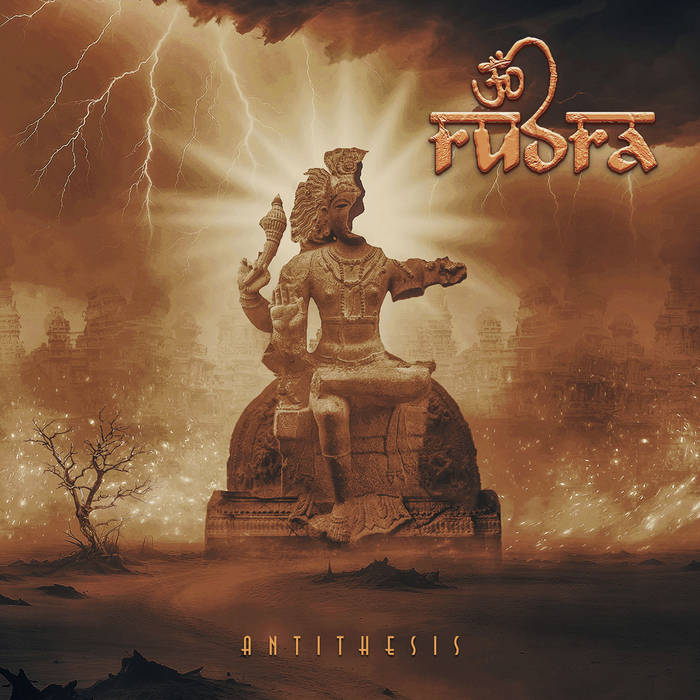
‘Antithesis’, released in 2025 through Awakening Records, is Rudra’s eleventh studio album and follows ‘Eight Mahavidyas’. The band deliberately went for a more compact and aggressive approach this time around, with ten tracks running for approximately thirty-nine minutes. The lyrical concept draws from Śaṅkara’s Daśaślokī, continuing Rudra’s long-running interest in Vedic philosophy rather than using the subject matter simply as an aesthetic backdrop.
The album opens with ‘Annihilate Diversity’, immediately showing that Rudra have not lost their ability to combine their philosophical themes with aggressive Metal. The guitars have plenty of weight while still allowing the riffs to move, and Shiva’s drumming keeps the track driving without turning everything into a constant speed exercise. Kathir’s vocals remain forceful and are well suited to the heavier direction of the album.
‘Persecute Identities’ continues with a strong Blackened Death and Thrash Metal influence. One of the better things about Rudra at this stage of their career is that the Indian and Vedic elements do not have to be constantly pushed into the listener’s face. They are already part of the band’s musical language, so the songs can simply work as Metal songs.
That is also noticeable on ‘Aggress the Void’ and ‘Reject the Untenable’, where Vinod and Devan provide plenty of guitar movement without turning the album into a technical showcase. Rudra have never lacked musicianship, but the playing remains focused on the songs, which helps keep the album accessible even when the subject matter becomes more philosophical.
The shorter tracks such as ‘Obliterate the Binding Forms’, ‘Kill the Coloured Projections’ and ‘Surrender the Search’ work particularly well within the overall running order. The decision to keep the songs relatively short gives ‘Antithesis’ a better sense of momentum and prevents the album from becoming too heavy with ideas.
The final three tracks, ‘Hunt the Three States’, ‘Abandon Dependence’ and ‘Massacre Duality’, give the band more room to develop their arrangements. The two longer songs especially benefit from the extra space, allowing the guitars and rhythm section to explore the material without abandoning the more direct approach established earlier in the album.
The production is clear and powerful without sounding sterile. Vinod recorded, engineered and mixed the album at LightWave 804, with Devan assisting, while Alan Douches handled the mastering. The guitars have enough definition to hear the individual parts, the drums have good impact and Kathir’s vocals remain prominent without overwhelming the rest of the band.
I also think the more aggressive approach works well after ‘Eight Mahavidyas’. Rudra have already shown that they can write longer and more elaborate material, so there is no need for ‘Antithesis’ to prove that side of the band again. Here they have concentrated on making the songs tighter and more direct, and the result is an album that is easy to return to.
After more than thirty years, Rudra are in the unusual position of being both pioneers and an active band. They have already influenced musicians who came after them, helped establish Vedic Metal as a recognised form of extreme Metal and taken their music well beyond Singapore, yet ‘Antithesis’ does not sound like a band simply looking back at its own history.
It is a solid continuation of what Rudra have been building since the days of Rudhra, with the old Death Metal foundation still present underneath the Vedic ideas, Sanskrit elements and philosophical themes. The production is strong, the musicianship is obvious without becoming excessive and the shorter songwriting gives the album a good pace from beginning to end.
For a band that has been around since 1992, Rudra have every right to rest on their history, but ‘Antithesis’ shows they are still interested in making new music rather than simply celebrating the past. It is an aggressive, focused album that adds another chapter to one of Singapore’s longest running and most distinctive Metal careers.