It has been a little over forty years since I first started listening to brutal music. Since the mid-’80s, I have been connected to everything that was emerging around Death Metal, European and American Thrash, Grindcore, and all the different variations that would later help shape much of the Extreme Metal we know today.
That is why, for me, it is a real honor to have the opportunity to write about Master. Not only because we are talking about a historic band, but because Master is also part of my own personal history.
I still remember old conversations with people from Chicago telling me there was one band I absolutely had to keep on my radar: Master. And behind all of that, of course, was Paul Speckmann, a character whose creative drive within extreme metal has been truly impressive. Master, Death Strike, Funeral Bitch… and I have to say it: Funeral Bitch is one of those bands I simply love. It is perfect.
I also remember the tape-trading years. Through one of those exchanges with people in England, the first Master album eventually made its way into my hands. I probably still have that recording somewhere among my old tapes. Hearing it back then was a huge experience, and to this day it remains one of the records I feel the strongest attachment to from that entire era.
Over the years, I have also been lucky enough to see Speckmann in very different settings: from much more primitive conditions in Santiago, Chile, to seeing him again this year in a more professional venue. But the result always ends up being the same: Master on stage is still a devastating band.
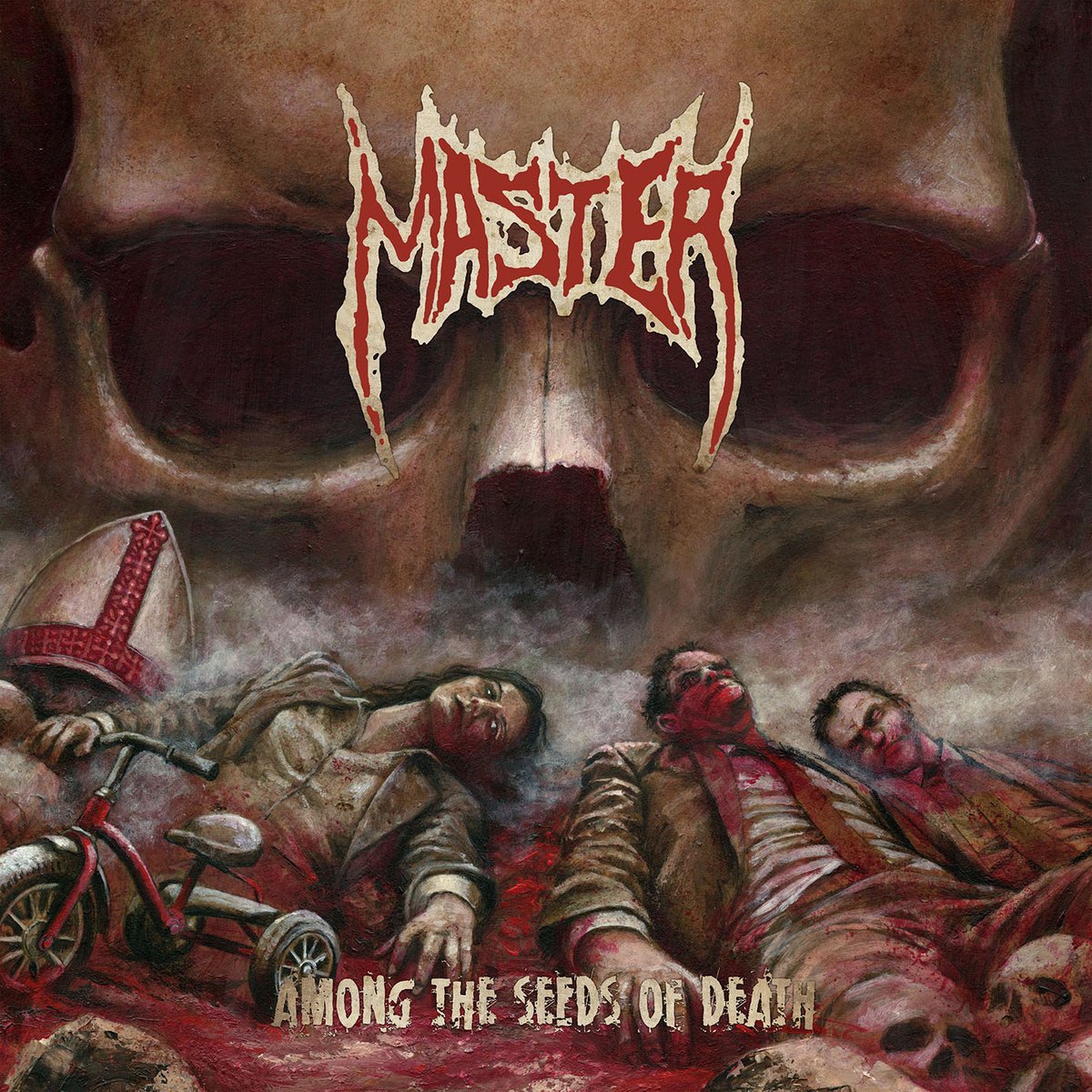
And that brings us directly to ‘Among the Seeds of Death’.
Because absolutely everything you expect from Master is here.
The songs gallop. They are aggressive. There are constant tempo changes, riffs still carrying that late-’80s spirit, plenty of Motörhead running through the veins, and above all that very particular way Master has always had of mixing death metal, thrash and punk without needing to decorate it too much.
The bass is enormous. It is not buried behind the guitars: it drives the songs, hits hard and leads the way. And Paul Speckmann’s voice sounds excellent. After so many years, hearing that voice still carrying so much personality and aggression is something to be genuinely thankful for.
One of the moments that caught my attention the most appears in ‘Injustice and Lack of Remorse’. There is something there that immediately made me think of Cliff Burton. Almost like a small tribute, intentional or not, in the way the bass takes over and breathes within the song. For me, it was one of those details that stays with you immediately.
But do not expect this album to reinvent Master. No. No. No. Quite the opposite. And that is exactly where its strength lies.
This is the formula we already know: raw, direct, old school, without makeup and without any need to prove anything. There is no desperate attempt to sound contemporary or to bring in new elements simply because the market demands it. There are riffs, bass, drums, that unmistakable voice, and a healthy dose of violence and aggression.
Master still believes in its own language. And thank fuck for that.
Because as time goes by, we are watching many of the musicians who built this history disappear. That is also why I believe it is worth saying these things while we still can: Paul Speckmann is one of the great heroes of Death Metal andTthrash. A musician who helped shape that violent, raw and still undefined territory where both styles were beginning to take form.
We are fortunate to still have him here, creating, recording, touring and defending a way of understanding this music that was born when none of this was guaranteed.
‘Among the Seeds of Death’ does not try to surprise us with a new formula. It gives us something that, for those of us who grew up with this music, may be even more important: confirmation that the old essence is still alive.
I am left with these nine excellent songs, that characteristic gallop, the massive bass sound, Speckmann’s voice and the feeling of hearing a band that remains completely connected to its own roots. An album that absolutely deserves a place in our collections.
And as long as Paul Speckmann keeps believing in what he does, I hope I will keep crossing paths with Master many more times, both through new records and on stage. Because if you ever get the chance to see them live, do it. Master is one of those bands worth seeing while we are still lucky enough to have them with us.