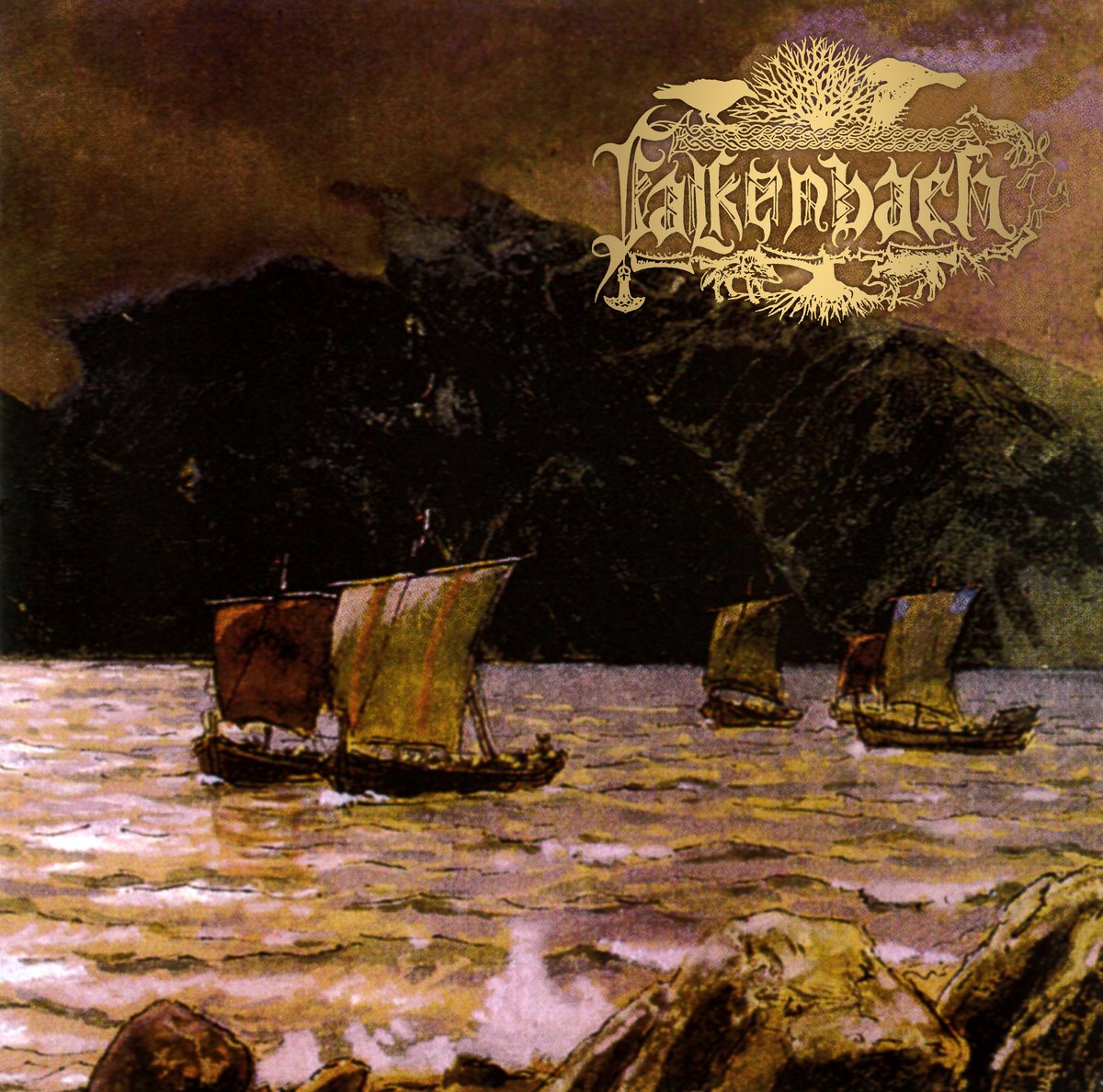
I discovered Falkenbach sometime in the mid-2000s, when I was already familiar with Bathory and had spent years listening to the kind of Black Metal that came out of the early 1990s. By then, Quorthon’s Viking-era albums had long been part of my musical foundation, so hearing bands that worked with similar historical themes and epic melodies was nothing particularly new. What interested me was how different musicians took those ideas and developed their own sound. Falkenbach was one of the names I came across during that period, and ‘…Magni Blandinn Ok Megintíri…’ was an album that made sense to me because it brought together the Black Metal roots I enjoyed with the grander musical direction that Bathory had helped establish.
Falkenbach was largely the work of Vratyas Vakyas, who had started the project in Germany during the late 1980s. The debut, ‘…En Their Medh Riki Fara…’, appeared in 1996, establishing his interest in Norse mythology, folk melodies and a more epic approach to Black Metal. Released through Napalm Records in 1998, the second album continued that direction while giving the compositions more room to develop. The title itself draws from Old Norse, and the material reflects Vratyas’s interest in the mythology and cultural imagery that informed much of the music.
The connection to Bathory is difficult to ignore, particularly if you grew up with ‘Hammerheart’ and ‘Twilight of the Gods’. Quorthon showed that Black Metal could move beyond speed and hostility into something more expansive, built around memorable melodies, acoustic passages and a sense of history. Falkenbach clearly operates in a musical landscape shaped by that development, but Vratyas brings his own character to it. His use of harsher vocals, folk-influenced arrangements and atmospheric passages gives the album a distinctly German identity within the wider Pagan and Viking Metal movement.
The album opens with ‘…When Gjallarhorn Will Sound…’, setting the tone with its combination of Black Metal guitars and sweeping melodies. There is a sense of anticipation in the arrangement, as though the music is building towards something beyond the immediate riff. The melodic lines are important here because they remain memorable without becoming overly polished or losing their connection to the heavier material. The song establishes the album’s central balance between aggression and grandeur.
‘The Heathenish Foray’ pushes further into that territory. The riffs have enough movement to keep the song from becoming a simple procession of epic themes, while the vocals retain the rough edge that connects Falkenbach to its Black Metal origins. The melodies are strong without relying on constant keyboard layers to create atmosphere. Vratyas understands that a guitar line can carry the emotional weight of a composition on its own, especially when it is allowed to develop rather than being buried under too many arrangements.
‘Baldur’s Tod’ brings the mythological side of the album into sharper focus. The subject matter draws from Norse tradition, but the music does not depend entirely on the listener knowing the stories behind the titles. The atmosphere comes through the melodies and pacing, giving the song a solemn quality that suits its theme. Elsewhere, the album moves between harsher passages and more reflective sections, creating variety without losing its overall identity.
What I appreciate about this period of Falkenbach is that the folk elements are part of the songwriting rather than decorations added to make the music sound ancient. The compositions still have a Black Metal foundation, and the rougher vocals help maintain that connection even when the melodies become more expansive. It is this balance that makes the Bathory comparison useful, rather than simply labelling Falkenbach a Viking Metal band and leaving it there.
Looking back from the mid-2000s, when I first discovered Falkenbach, ‘…Magni Blandinn Ok Megintíri…’ offered a reminder that the influence of Bathory’s Viking era extended well beyond the original albums. Quorthon had opened a door, but the bands that followed still had to find their own way through it. Vratyas Vakyas did that by combining Black Metal, Nordic themes and memorable melodies into a sound that was recognisably Falkenbach. This album remains an important step in that development, and a worthwhile listen for anyone interested in the meeting point between early Black Metal and the more epic direction that emerged during the 1990s.
