
The turn of the millennium saw the emergence of a certain US Brutal Death Metal outfit hailing from Knoxville, Tennessee. Releasing an initial three utterly ruthless albums between 2000-2004, this time period allowed this act to cement their indelible influence upon the shape of the genre. With meticulous attention to historical detail and a core musical ideology centred around the impossibly brutal methods of torture deployed during the Middle Ages. This morbidly rich thematic substance was paired with insanely technical instrumentation often performed at knee shattering speeds. Exploiting the various hallmarks of Brutal Death Metal tempo exposition employed by fantastic musicianship and songwriting prowess. This particular legendary band was toying with sharpened complex devices of historical nihilistic anguish whilst their lagging contemporaries were still busy figuring out how to hold a knife and fork. Twenty years would elapse before the eventual release of a hugely anticipated fourth full-length record in 2024. It was an album so huge, so uniquely crushing, and so unsettlingly hideous that it currently stands proudly as one of the finest Metal albums of the current decade. Dear readers, it is my pleasure to welcome the one and only Brodequin to VM-Underground.
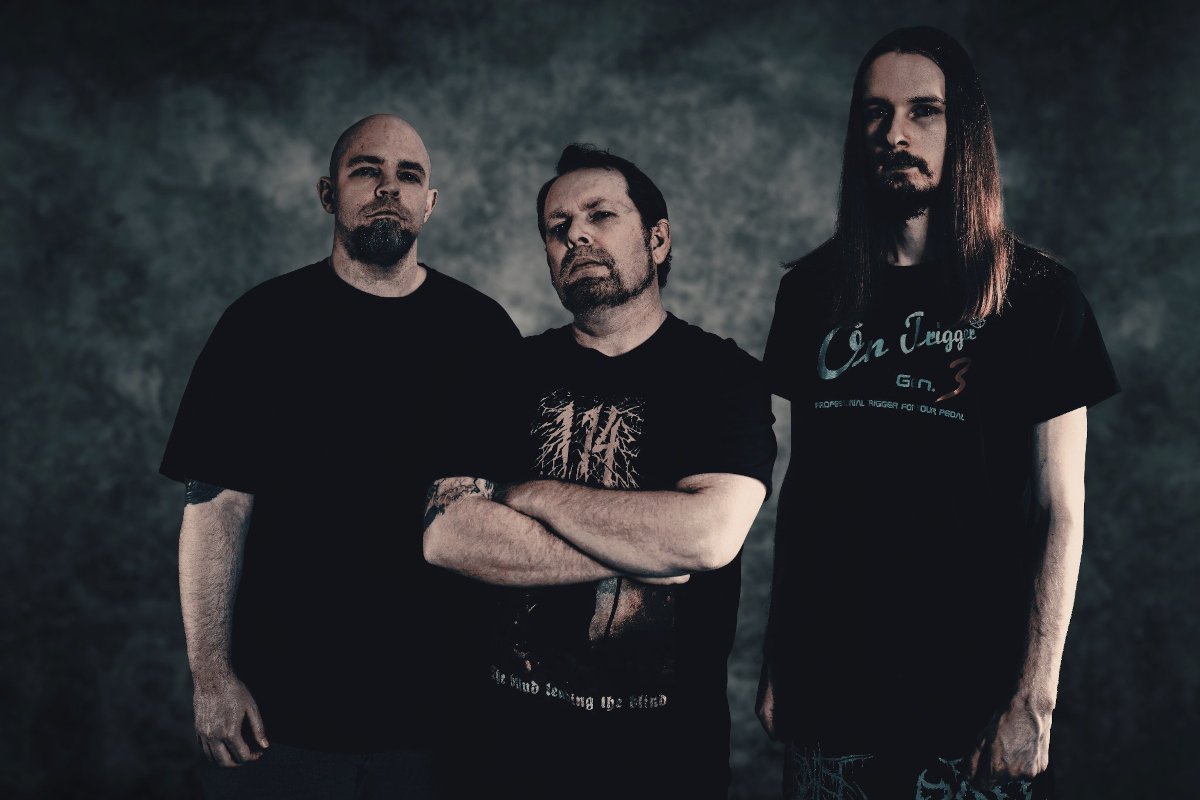
First of all, I’d like to say a big thank you for taking the time to conduct this interview with us here at VM. I’d like to start this segment by taking things back to the late nineties when you first started the band. How did Brodequin come to be?
Mike: Jamie and I had been playing music together for quite sometime and were looking for a drummer to complete the line up. I honestly can’t remember how we met Chad, but it was pretty obvious after the first time we played together that we had similar interests and we just clicked.
Jamie: As Mike said, we had been putting songs together for a while and were looking for the final piece. I remember meeting Chad at a local show. It may have been when his band at the time Besieged was playing. We all got along really well and started going to regional shows together. Before long, we played together and it was clear to all of us that we had something we knew we all wanted to work towards.
The band is obviously renowned for making music that is not just incredibly brutal but also torrentially fast and technical. How did you end up aspiring to play and write like this?
Mike: It’s an evolution really. I was always seeking out the most primitive, raw, and fast music I could find and that shaped who I became as a player. I was never interested in the typical guitar hero fretboard wankery, but a riff, sometimes no matter how simple, really did it for me.
Jamie: It was a natural progression. Once we discovered a band, we would often think to ourselves “who else is doing this, but faster?” One thing led to another, and as we would learn some of our favorite songs, they just became more and more intense/difficult to learn. It’s something that bleeds into the writing process. Once you become accustomed to playing a certain way, you can’t help but write in a similar fashion.
Brennan: For me personally, I was always drawn to challenging music, both in the sense of aggression and technicality. The combination of those two elements is something that you can’t find in pop music or most rock music and is almost completely exclusive to metal. Once I discovered blast beats, I realized that was what I wanted to be able to do one day. I never imagined that I would eventually reach the speeds that Brodequin does. It was the result of pushing my own limitations in terms of speed and intricacy.
Your releases and identity as a band are famed for your focus on historical torture and execution methods. What do you think are some of the most insane or cruel methods of punishment that you’ve written about in your music?
Mike: The most insane thing for me is the Brazen Bull. For those unfamiliar, it is a bull made of bronze that the victim was placed inside. A fire was lit underneath, and as the victim was roasted alive, their screams would be amplified through a series of pipes inside the bull. It takes next level sadism to invent something like that.
Jamie: This is something that gets asked fairly frequently. It’s difficult to say, as it’s difficult to correctly identify what actually was in practice vs. myth. There are several methods that are debated such as the Iron Maiden, Blood Eagle and even different methods of imprisonment, but of the ones where we have extensive records, I would say Hung, Drawn and Quartered, The Bronze Bowl and Strappado come to mind.
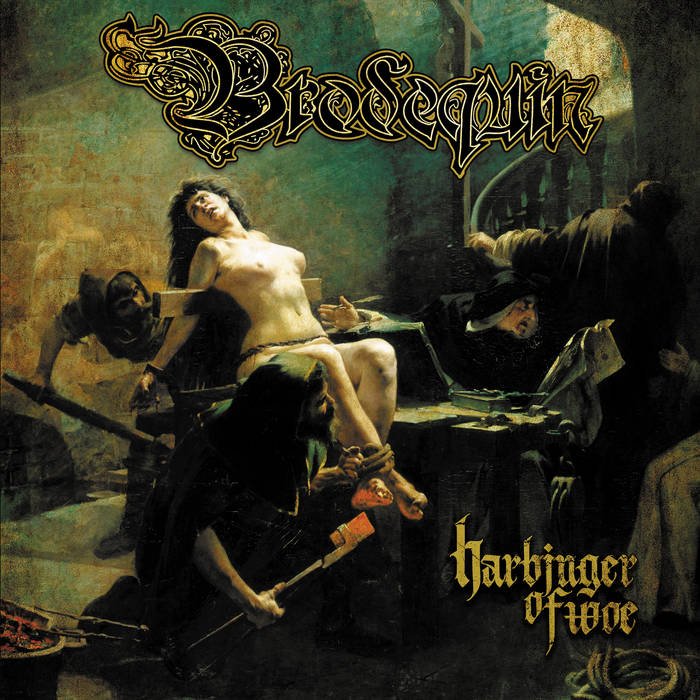
Your long-awaited fourth album, Harbinger of Woe, was released in 2024. It’s a phenomenal record, and for me, was my first ever exposure to Brodequin. I’ve now spent time with all of your (great) releases. How do you think that the release of Harbinger helped introduce Brodequin to a newer generation of fans?
Mike: First off, thanks. I’m glad you enjoyed the new album. Brodequin has always been kind of a cult underground band. For most people, unless you were there at the time the original albums were released, you wouldn’t know we ever existed. The fan base has extended so much since then. It is incredible. Releasing a new album and getting back into live shows has put us in front of far more people than in the past. The scene has grown so much.
Jamie: The response to Harbinger has been overwhelming. We were able to pick up so many new fans and the album made it in front of so many (like yourself) who were hearing us for the first time. I think it’s a collective of things that helped with this album. It’s the best recording we have had, the best distribution, and definitely the most press we have done in respect to interviews and reviews. As Mike pointed out, the scene has grown considerably, and fortunately for us, we have been embraced by many in it.
Brennan: I think that the release of Harbinger helped introduce Brodequin to a newer generation of fans by being much more accessible in terms of production, but not compromising on the sound and aesthetic of the band, while also introducing new elements to the sound. I have to give credit to Season of Mist for helping promote the album and land us numerous opportunities to play for some of the biggest crowds we’ve ever played in front of.
What were you specifically trying to achieve with the album’s style/scope and how does that compare to the approach to your earlier albums?
Mike: I thought more about the lyrics in the sense of a full story this time. Previously, I thought of the music as the soundtrack to the lyrics. Writing lyrics about this level of human barbarism leads to writing incredibly violent music. With Harbinger, I wanted to delve into some passages that characterized the overwhelming despair of the victims. I wasn’t sure how to do that at first but when writing Of Pillars and Trees, it just popped into my head.
Jamie: For me it was about progressing and picking up where we left off. I wanted the lyrics to not only portray the method, but tap into the overall scene and try to really paint a picture, almost as if you are a witness to the actions taking place or have a feeling of what’s about to happen.
Brennan: Stylistically, we wanted to achieve things that we never did with the previous albums. The most obvious thing is that we wanted a very good mix that still had the grit and brutality that is so essential to our sound. In addition, we wanted to expand the musical palette to include more atmosphere to go along with the immersive lyrics and imagery. I can’t speak to how it compares to the approach on the previous albums since I was not involved, but I do believe that Harbinger has a certain cinematic element to it, which is helped by the effects and layering that we introduced to it.
I caught your live performance at last year’s Damnation festival in Manchester, UK. It was absolutely crushing! Have live performances always been a big part of Brodequin, and are there any plans for you to return to Europe in the future?
Mike: That was a great show! Can’t wait to come back. Live performances have always been a big part of the band, but they are better now than they have ever been. Everything feels dialed in. Sure, we had some great shows back in the day, but it was a different vibe. Today’s shows really pay tribute to the original songs the way they were written, and the results have been amazing. We will be returning to Europe in 2027, although I won’t mention where until the promoters make announcements. I’d hate to steal their thunder.
Jamie: That was an amazing experience! Top level production from all the crew at Damnation! We have a few performances lined up, but as Mike said they are not officially announced yet. We are fortunate in the respect that many of our live performances become a very chaotic, energy releasing event. Stage diving happens frequently, and sometimes it can get pretty tricky up there dodging them, but they all do a great job of dodging me as much as I dodge them. I think it’s a fantastic part of many of our shows.
Brennan: Damnation Fest was incredible! Live performances for us are absolutely everything. When you consider that the first three albums’ productions are so lacking, the only way for people to get the message of the songs fully is to see them performed live. We do have a couple of shows lined up in Europe for 2027. It will be great to be back!
Lastly, if Brodequin was to perform a show at any venue in the world alongside any other three artists in existence, where would it be, and who would be playing?
Mike: Wembley Stadium with Slayer, Marduk, and Angelcopse. Let’s make it happen!
Jamie: I’m not sure I can beat Mike’s response!
Brennan: Madison Square Garden with Cannibal Corpse, Dying Fetus, and Immolation.
That would be a couple of incredible gigs at those giant venues! Queen’s classic Wembley show could never hold a candle to that and Brutal Death Metal at MSG feels like such a natural fit right next to Eric Clapton! Once again, thanks so much for conducting this interview with us.