
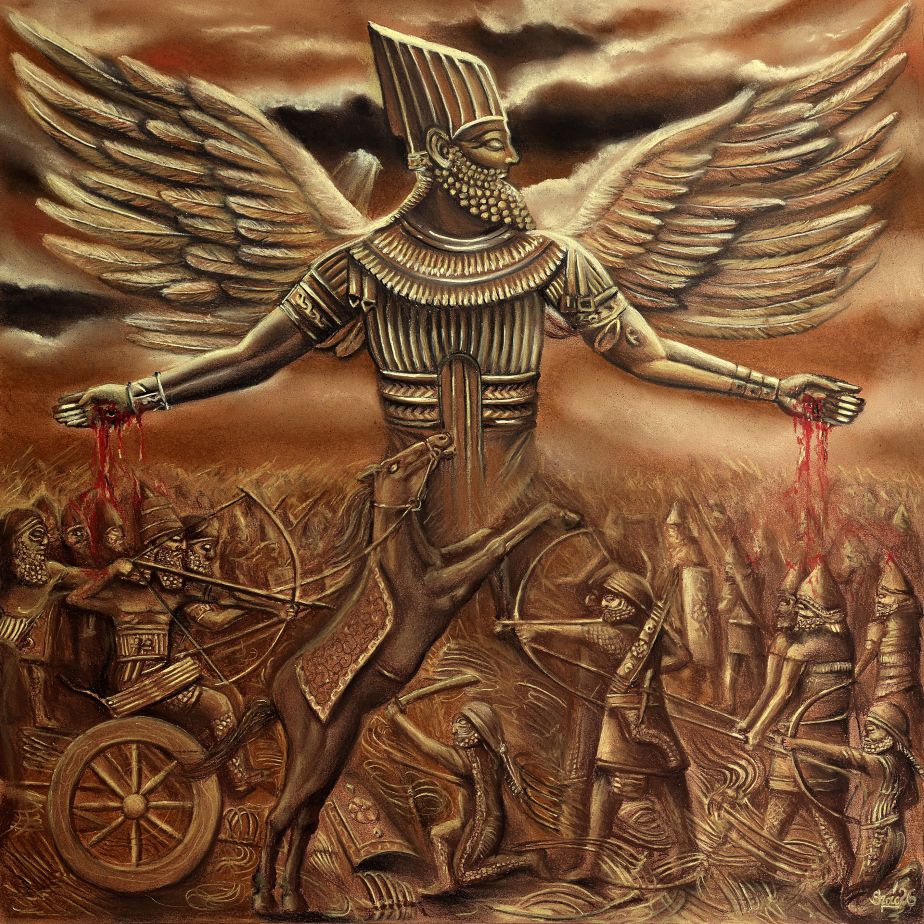
Thirty-five years is a long time for any underground metal band, especially for one that has never depended on constant touring, major commercial exposure, or the pressure of releasing albums according to a fixed schedule. Poland’s Neolith have followed their own path since the early nineties, gradually moving away from the slower Doom/Death Metal character of their beginnings toward the darker and more aggressive Black/Death Metal approach that defines them today.
‘Inbir’ continues that evolution without sounding like an attempt to modernize Neolith for a new generation.
And that distinction is important.
The band remains deeply connected to an old-school understanding of extreme metal: riffs and atmosphere come before technical exhibition, aggression does not require an excessively polished production, and darkness should come from the music itself rather than from studio tricks. Neolith clearly wants the album to sound powerful, but not sterile.
For the first time in their career, the band recorded the material entirely by themselves, working between their rehearsal room and different home studios before handing everything over to Haldor Grunberg of Satanic Audio. Despite this more contemporary recording method, their philosophy remains deliberately traditional. Levi has explained that Neolith tries to avoid anything that sounds “plastic” or overly dependent on technical gimmicks, and that approach is probably one of the most interesting aspects surrounding ‘Inbir’.
The album clearly operates within Black/Death Metal territory, although the band’s Death Metal foundation remains important. Neolith’s progression toward a darker and more aggressive sound has happened gradually rather than through any radical stylistic reinvention. This is still a band concerned with heaviness, atmosphere, and riffs, but the Black Metal influence has become increasingly embedded in their identity.
There is also something interesting about listening to a veteran band that does not seem particularly concerned with competing with contemporary extreme metal production. Younger bands may be faster, cleaner, and technically extraordinary, but technical ability alone has never guaranteed memorable music. Levi himself has commented that while many younger musicians impress him technically, he sometimes feels that the emotional element is missing.
That observation also says quite a lot about Neolith.
‘Inbir’ does not seem conceived as a display of virtuosity. It is more about maintaining atmosphere, aggression, and personality after decades within the underground.
The band’s history inevitably gives the album a certain weight, but it should not become the main reason to listen to it. Neolith deserves attention because they continue developing the sound established across their previous releases instead of simply reconstructing the material of their early years.
Whether ‘Inbir’ really is the best album of their career, as Levi himself believes, is something listeners who know their discography well will have to decide. A statement like that will always remain subjective.
What is easier to recognize is that Neolith remains committed to the same fundamental idea that has kept the band alive since the early nineties: creating extreme metal on their own terms.
No forced reinvention.
No artificial modernization.
Just an old underground band still refining its own identity.
