There is a lot of bullshit written about the birth of Black Metal. Throw Satanic lyrics, an ugly cover and a filthy recording together and suddenly another record gets dragged into the argument over what was the first Black Metal album. I have never been convinced by that way of looking at it. There were plenty of bands making dark, evil and extreme music before Black Metal became an established genre, but that does not mean they were actually playing Black Metal. If we are going to have this discussion, I would rather look at the music itself and listen to where the sound actually became identifiable.
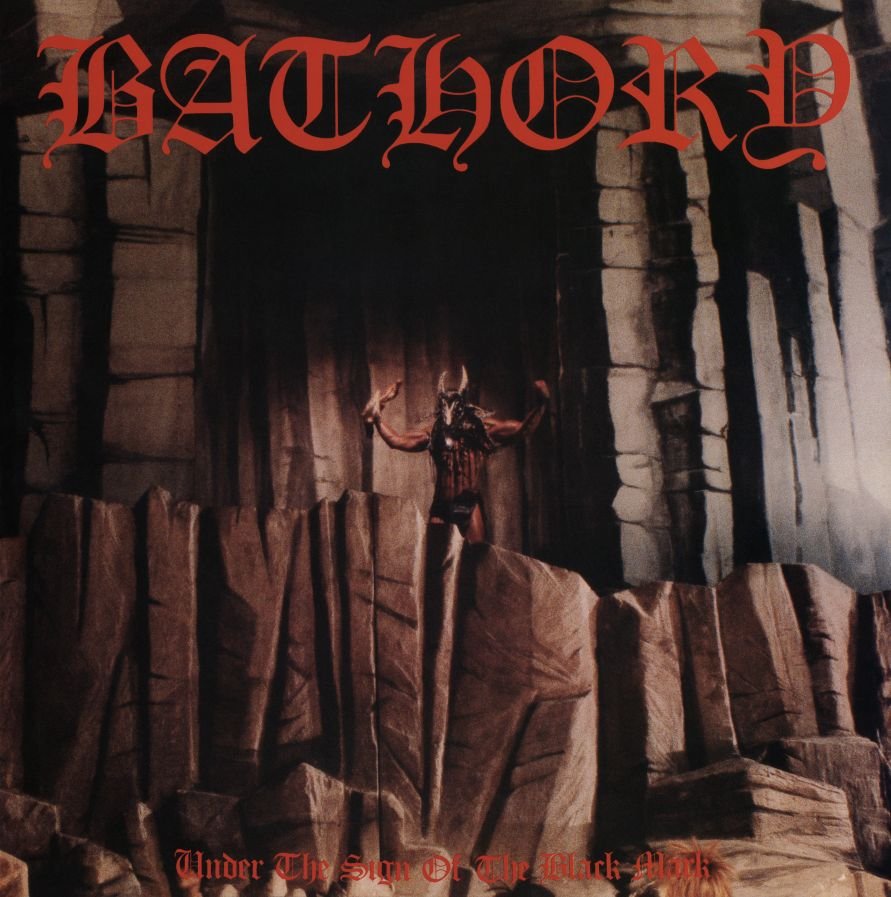
That is where Bathory’s first three records become so important. The first album was the great rupture, taking the ugliness and attitude of Venom and pushing it through a much more primitive and violent Heavy Metal framework. ‘The Return……’ went further, stripping away more of the traditional Metal character and becoming colder, harsher and more isolated. But ‘Under the Sign of the Black Mark’ is where those developments finally come together and the music stops sounding like Extreme Metal being pushed beyond its limits. It has become something else.
The opening of the record tells you immediately that Bathory had moved somewhere different. There is no attempt to ease into the album or establish some polished sense of production. The guitars come in sounding thin, abrasive and almost diseased, while the drums and vocals sit inside that noise rather than being neatly separated from it. The sound is crude, but the crudeness is not the whole point. What matters is that the production, the riffs and the vocals are all creating the same atmosphere.
Quorthon’s guitar sound is one of the most important parts of the album. Compared with the debut, there is less of that obvious Heavy Metal weight underneath the riffs. The guitars have become more skeletal, with the buzzing distortion and repeated picking giving the music a strange sense of movement even when the riffs themselves are relatively simple. This is a sound that would eventually be copied to death, but at the time it was still completely fucking strange.
The first Bathory album had already shown that Quorthon understood the importance of making the recording itself part of the music. On ‘Under the Sign of the Black Mark’ he takes that further. The guitars do not need to sound powerful in the traditional sense because the lack of weight creates its own atmosphere. They scrape across the drums and vocals, leaving very little clean space in the mix. It gives the whole record that feeling of being trapped inside a rehearsal room somewhere underground, except there is clearly more thought behind the songwriting than the primitive recording might suggest.
‘The Return……’ is the important bridge here because that album had already started removing the familiar Heavy Metal elements. But there is still a sense of Quorthon experimenting with how far he could take the sound. On the third album, the choices feel much more instinctive. He knows what the guitar should sound like, he knows what the vocals should do and he understands that the songs do not need complicated arrangements to hold attention.
‘Massacre’ is probably the most obvious example of the violent side of the record, but reducing the album to speed would completely miss what makes it important. ‘Call From the Grave’ has a much heavier and slower character, while ‘Woman of Dark Desires’ carries its own strange atmosphere. The album keeps shifting between different kinds of aggression without losing its identity, and that becomes particularly clear when ‘Enter the Eternal Fire’ arrives with its slower, more expansive approach.
That song is important because it shows how much room there was inside the sound Quorthon had developed. The music could become slower and more atmospheric without suddenly turning into something that needed a clean production or conventional Heavy Metal arrangement. The riff remains primitive, the vocals remain harsh and the recording remains filthy, but the mood changes completely. That idea would become enormously important to Black Metal later, where atmosphere could be as important as speed.
This is one of the reasons I think ‘Under the Sign of the Black Mark’ deserves to be separated from the records that are sometimes labelled Black Metal simply because they were dark or extreme. The album has a very particular musical identity. The tremolo-driven guitar work, the repetition, the rasped vocals, the primitive drums and the ugly production are not isolated tricks. They work together throughout the record.
Even the quieter moments have a purpose because they make the faster material sound more violent when it returns. Quorthon understood that constant aggression eventually loses its effect. By changing the pacing, he gives the riffs more weight without having to make the guitars heavier or the production bigger.
There is also a difference in the songwriting compared with ‘The Return……’ that becomes obvious after repeated listening. The second album has some incredible moments and is essential to the development of the sound, but it still has the feeling of Quorthon pushing at the boundaries of something he was discovering. ‘Under the Sign of the Black Mark’ feels more settled. The riffs are often brutally direct and the arrangements are not interested in showing off, but there is a much clearer understanding of how the songs should move.
That is where the record becomes more than simply another great early Bathory album. A musician hearing this in 1987 could actually take the individual elements and build something from them. The guitar tone was there. The vocal approach was there. The primitive production was there. The Satanic and occult atmosphere was there. The mixture of fast and slow material was there. The basic approach to riffing was there. None of these things were completely invented by Quorthon in isolation, but he brought them together in a way that made the combination unmistakable.
This is also why I do not think the usual argument about whether Venom or Bathory was ‘first’ really settles anything. Venom gave Extreme Metal the name Black Metal and created a huge part of its early attitude and imagery, but their music still belongs to a different musical world. Bathory’s first album moved the sound considerably closer, and ‘The Return……’ moved it further again. ‘Under the Sign of the Black Mark’ is where the musical language becomes close enough to what later generations would call Black Metal that the argument starts to make sense.
The album also had the good fortune of arriving before the sound became predictable. Nobody had spent years turning this guitar tone into a formula. Nobody had worked out exactly how Black Metal was supposed to be recorded. Nobody had established the standard set of riffs, vocal approaches and production tricks. Quorthon was making decisions without having a genre rulebook in front of him, which is probably why the record still sounds more dangerous than many albums that deliberately tried to recreate its sound.
There are rough edges everywhere, and I would never want them removed. The recording is uneven, the guitars are abrasive and the vocals can sound almost completely detached from conventional ideas of performance. But underneath all of that is a very strong sense of songwriting. The album knows when to attack and when to slow down, when to repeat a riff and when to let a song develop. That is something that gets overlooked when people only talk about how raw it sounds.
For me, this is where Bathory stops being simply an extreme Heavy Metal band and becomes the foundation of what Black Metal would be. The first album opened the door, ‘The Return……’ pushed deeper into the darkness, but ‘Under the Sign of the Black Mark’ gave that darkness a musical form that could be picked up by other musicians and taken somewhere else.
That is why I consider this the first REAL Black Metal album. Not because nothing before it was evil enough, fast enough or primitive enough, but because the music itself had finally arrived at a point where it no longer needed to be explained through Venom, Heavy Metal or Thrash. You could put this record on and hear a musical identity that belonged to itself, with all the ugliness, atmosphere and aggression that would become the foundation for the Black Metal underground that followed.
