My introduction to Zarathustra goes back to 2007, when I came across the band at Tomegatherion, a place that deserves its own chapter in the Singapore underground’s history. If you happen to be one of the people reading this who have spent enough time there, you would know that the store was about much more than buying records. It was one of those places where metalheads from Singapore, musicians passing through, visiting bands and metal tourists would turn up looking for Shyaithan. Boys, girls, young ones, older heads, skinny fellows, big fellows and just about every shape and size imaginable could be found there. Some came to talk music, some came to meet people, some came with questions, some came to snoop around to pass info to Pdos and others probably came without knowing exactly what they were looking for until they got there. Shyaithan was practically a human landmark, and if you were a metalhead visiting Singapore, there was a fair chance somebody would point you in the direction of Tomegatherion. You might have walked in intending to buy one CD and ended up spending half the afternoon talking about bands you had never heard of. The wallet might have suffered, but the ears usually benefited. Also, we had some nice friends who helped sweep up cigarette butts outside.
That was part of the charm of those days. You did not have every band, every interview and every obscure release sitting in your pocket, ready to be searched in seconds. Discoveries often happened because somebody introduced you to something, handed you a CD or simply mentioned a name during a conversation. In my case, Zarathustra entered the picture through that very environment in 2006. It was another reminder of how much the underground depended on the people who kept these connections alive, long before social media made it possible for everyone to be everywhere without actually going anywhere.
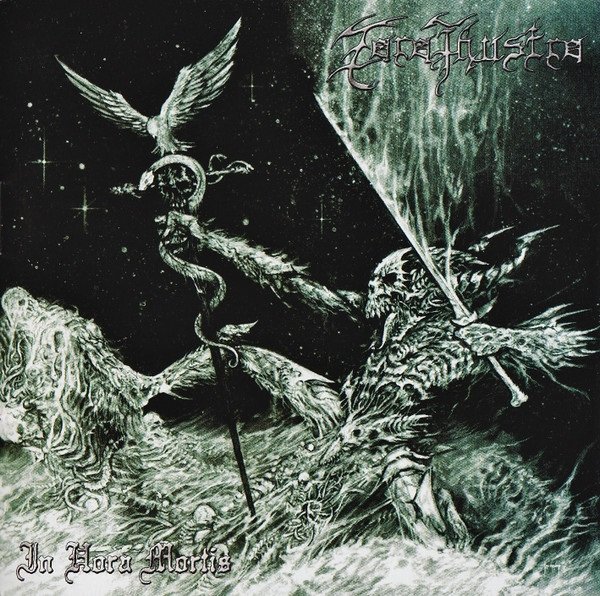
Hailing from Germany, Zarathustra formed in 1996 and spent their early years building a name through demos before releasing ‘Dogma Antichrist’ in 2000. ‘Nihilistic Terror’ followed in 2003, the same year their second full-length ‘Perpetual Black Force’ appeared. By the time ‘In Hora Mortis’ arrived in September 2006 through Agonia Records, the band had already established a sound rooted in the colder, more traditional side of Black Metal. The album was recorded in May 2006 at Necromorbus Studio in Stockholm, with Tore Stjerna handling production, engineering, mixing and mastering. The lineup featured Hurricane on vocals, Kerberos on guitars, Desecrator on bass and Mersus on drums, with Chris Moyen’s name familiar to followers of the underground through his artwork for the band’s earlier ‘Contempt’ EP.
‘In Hora Mortis’ contains seven tracks, beginning with the instrumental ‘Periculum Mortis’ before moving into ‘Souls Ejaculation’ and ‘Embrace Your Insanity’. Zarathustra were not chasing the polished, expansive sound that became common in parts of the Black Metal scene. Their music draws from the second-wave tradition, with tremolo-picked guitar lines, driving drums, harsh vocals and melodies that carry a distinctly wintry character. The riffs have room to develop, shifting between faster passages and heavier sections without losing the album’s dark atmosphere. Hurricane’s vocals suit the material, delivering the lyrics with an abrasive edge that keeps the music firmly within the harsher German Black Metal tradition.
Songs such as ‘Salvation from Being’ and ‘Crown of Creation’ give the album space to stretch beyond straightforward speed, while ‘Odem’ and ‘Towards Perdition’ continue its grim progression. The guitar work is central to the record, balancing rawness with melodies that stay in the mind after the songs have ended. Mersus keeps the drums moving beneath the guitars without turning every passage into a race, and the production gives the instruments enough definition for the riffs to come through while retaining the cold atmosphere expected from a Necromorbus recording of that period.
‘In Hora Mortis’ belongs to that particular period of European Black Metal, when bands were still drawing heavily from the genre’s established language while developing their own place within it. Good band, check them out!
