
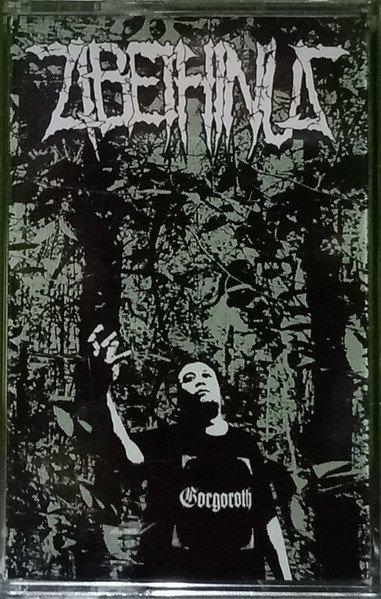
One Barchiel has spent a considerable part of his musical life carving out a particular identity within Singapore’s Black Metal underground. From his years with As Sahar to Phenomistik, his interest in Eastern melodies, regional folklore and the darker side of Nusantara culture has remained a recognisable part of his songwriting. Zibethinus is another chapter in that journey, this time as a solo project formed in 2020 and described by One Barchiel as Black Metal Hutan. Inspired by the forests and rich plant life of Southeast Asia, the concept gives him another subject to explore while retaining the musical character that has followed him throughout his career.
The self-titled EP was released in August 2022 through Shah Honda Music, with One Barchiel handling everything himself. There are five tracks, including an instrumental version of the closing composition, and the material carries plenty of that familiar 1990s Black Metal atmosphere. The buzzing guitar tone, dry and harsh vocal delivery, melodic tremolo passages and occasional changes in pace bring to mind the older Scandinavian school. Satyricon and Burzum are useful reference points here, alongside the unmistakable shadow of his earlier As Sahar work. These influences are not difficult to recognise, but One Barchiel has enough of his own musical background to keep the material from sounding like a straightforward imitation.
‘Tangisan di Balik Rimbun’ sets the mood with its rough guitar work and Black Metal urgency, while ‘Asri’ brings out the melodic side of the project. The riffs have that familiar cold, repetitive quality associated with the early 1990s, but there is an underlying sense of melody that keeps the music interesting. ‘Temiar’ is another highlight, particularly for its connection to the indigenous Temiar people and the brief introduction of traditional folk elements. It is a welcome change in the middle of the EP and gives the composition a character beyond the usual Black Metal framework. This is where the Black Metal Hutan idea becomes more than just a name.
‘Gemersik Belantara’ brings the EP towards its conclusion, and the additional instrumental version deserves attention. Without the vocals, the guitar melodies become more prominent, especially the lead work that carries an unexpected flavour of Malay Heavy Metal from the 1980s. It is an interesting touch and a reminder that One Barchiel’s musical vocabulary reaches further than the standard Black Metal reference points. There is a strong sense of regional musical memory running through this material, even when the basic structure remains firmly rooted in the Scandinavian Black Metal tradition.
There are a couple of things that keep this EP from reaching its full potential. The programmed drums are noticeable and lack some of the natural movement that a live drummer could have brought to the compositions. The production also feels rather hurried in places, particularly during the opening track, which gives the impression that the material could have benefited from more time in the recording process. These shortcomings are worth mentioning, but they do not erase the songwriting ideas or the melodies running through the release.
What makes ‘Zibethinus’ worth listening to is the combination of familiar 1990s Black Metal influences with One Barchiel’s continuing interest in the musical and cultural identity of this region. There is enough here for listeners who grew up with Burzum and Satyricon, but those familiar with the older As Sahar recordings will find another connection to that particular Eastern Black Metal sound. The Temiar-inspired material and the Malay Heavy Metal touches make the EP especially interesting, giving it a character that goes beyond another exercise in nostalgia.
‘Zibethinus’ is not a flawless recording, and the production issues are difficult to ignore. However, there is a genuine musical personality behind it, and that counts for a lot. One Barchiel knows the territory he wants to explore, and despite the limitations of this recording, the melodies and regional influences give the EP enough substance to deserve a place in the collection. Anyone who still has an appreciation for the old Scandinavian Black Metal sound, particularly when it crosses paths with the Eastern identity developed during the early As Sahar years, should give this one a proper listen.
