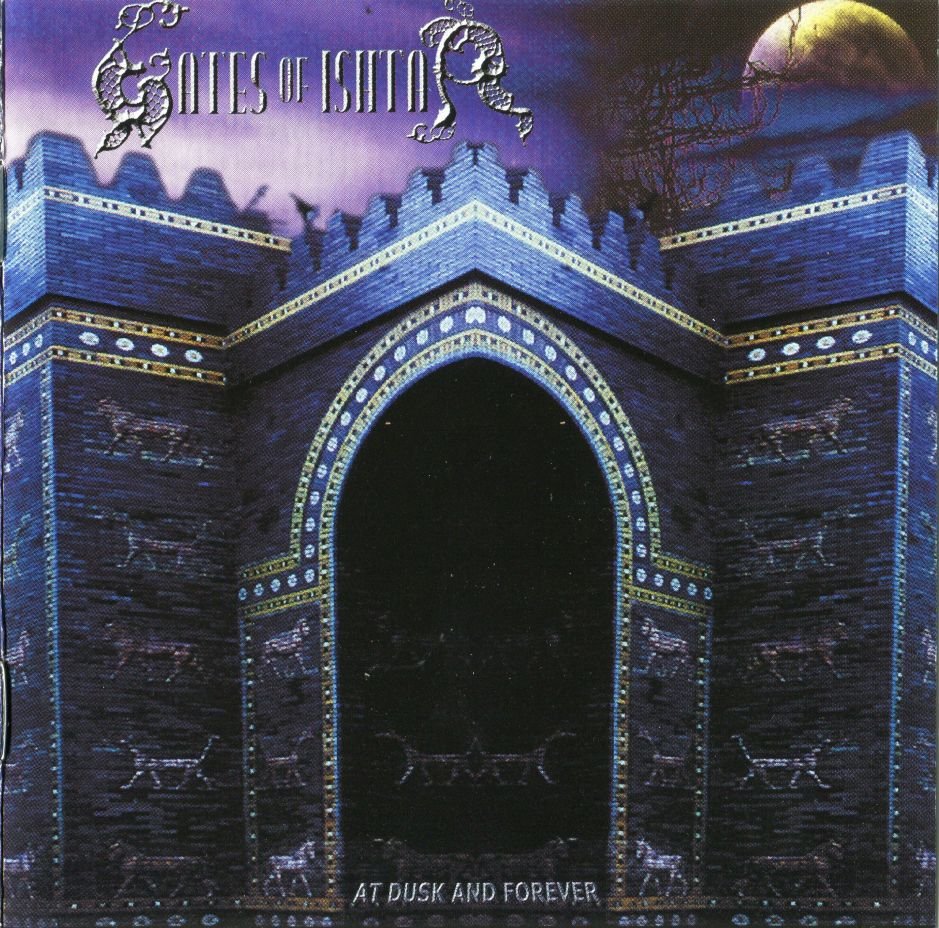
There is something about ‘At Dusk and Forever’ that makes it easy to forget how old this album actually is. The guitars come charging in with that familiar Swedish coldness, but there is a real urgency to the music that keeps it from becoming another predictable Melodic Death Metal record from the late 1990s. Gates of Ishtar could write melody, but they never allowed it to completely take the aggression out of their music.
By this point the band had already released ‘A Bloodred Path’ and ‘The Dawn of Flames’, and the lineup had gone through some changes. Mikael Sandorf handled vocals, guitars and bass, with Urban Granbacke on guitar and Oskar Karlsson on drums, while Göran Norman, Joakim Holmqvist and Niklas Lindgren contributed additional guitar work. Norman also handled the recording and mixing at Turpethead / Lucichrist Studios. The album contains eight songs and runs for roughly thirty-five minutes, which suits the material because there is very little unnecessary padding.
The guitars are obviously the main attraction. ‘Wounds’ immediately demonstrates how the band could combine fast Death Metal riffing with melodic guitar lines without making the music feel soft. ‘The Nightfall’ goes even further, with those melancholic Scandinavian melodies giving the song plenty of character while the aggressive foundation keeps it firmly rooted in Death Metal. That balance is where Gates of Ishtar were strongest.
Sandorf’s vocals fit the music naturally, while the drums provide the forward momentum needed to stop the melodic passages from becoming too comfortable. There are also some nice changes in atmosphere throughout the album. ‘Always’ gives the record a more reflective feeling, while ‘Never Alone Again’ allows the guitars more room to develop. These moments make the album more interesting because the band clearly understood that melody could be used to create mood rather than simply decorate a riff.
Then there is ‘Forever Beach’, the unusual instrumental closer. After an album dominated by aggressive guitars and harsh vocals, Gates of Ishtar finish by moving into a much more atmospheric direction. It is an unexpected ending, but it works because it gives the record a sense of closure and shows another side of the band.
The production has that unmistakable 1998 character. The guitars have enough clarity for the melodies to stand out, but there is still some roughness around the edges that suits the material. It certainly does not have the polished sound associated with much of the Melodic Death Metal that followed, and personally I think that helps preserve its colder atmosphere.
My only real criticism is that some of the songs do not leave quite the same impression as the strongest material. The compact songwriting keeps the album moving, but occasionally I wish certain ideas had been developed further, especially when the band moved into their atmospheric territory. ‘Forever Beach’ actually makes you wonder what they might have done with that side of their sound if they had continued.
Unfortunately, ‘At Dusk and Forever’ became the final album of the original Gates of Ishtar era. Looking back now, it stands as a solid final statement from a band that had developed a recognisable identity within the crowded Swedish scene. It has the speed, aggression and melodic guitar work expected from the period, but there is enough character in the songwriting to make it worth returning to.
For me, Gates of Ishtar are one of those bands that deserve to be remembered beyond the usual handful of Swedish names. ‘At Dusk and Forever’ is compact, cold and aggressive, with enough melody to give the songs personality without taking away their Death Metal backbone.