It is one thing to summon cavernous noise and expect honesty to follow, yet such creation can prove fickle, a hollow façade, void of spirit. Then there are those who can take the constructs of sound and, through art, fashion a weapon: a weapon whose blade needs no stone to whet its edge, for time affects it not. Rather, through the passage of time, the weapon only grows more virulent in its shape. In turn, the artist becomes the weapon, but in this rare instance, the weapon becomes something else: Cryptopsy. A band that has stood the test of time, Cryptopsy remains a titan within the realm of Death Metal, where sound becomes a means through which to deliver a gospel soaked in vitriol. I recently had the chance to conduct an interview with frontman Matt McGachy. Through these words, may those unfamiliar with the band be enticed to dive into their art, and for those already familiar with their legacy, may this morsel offer something worth savouring.
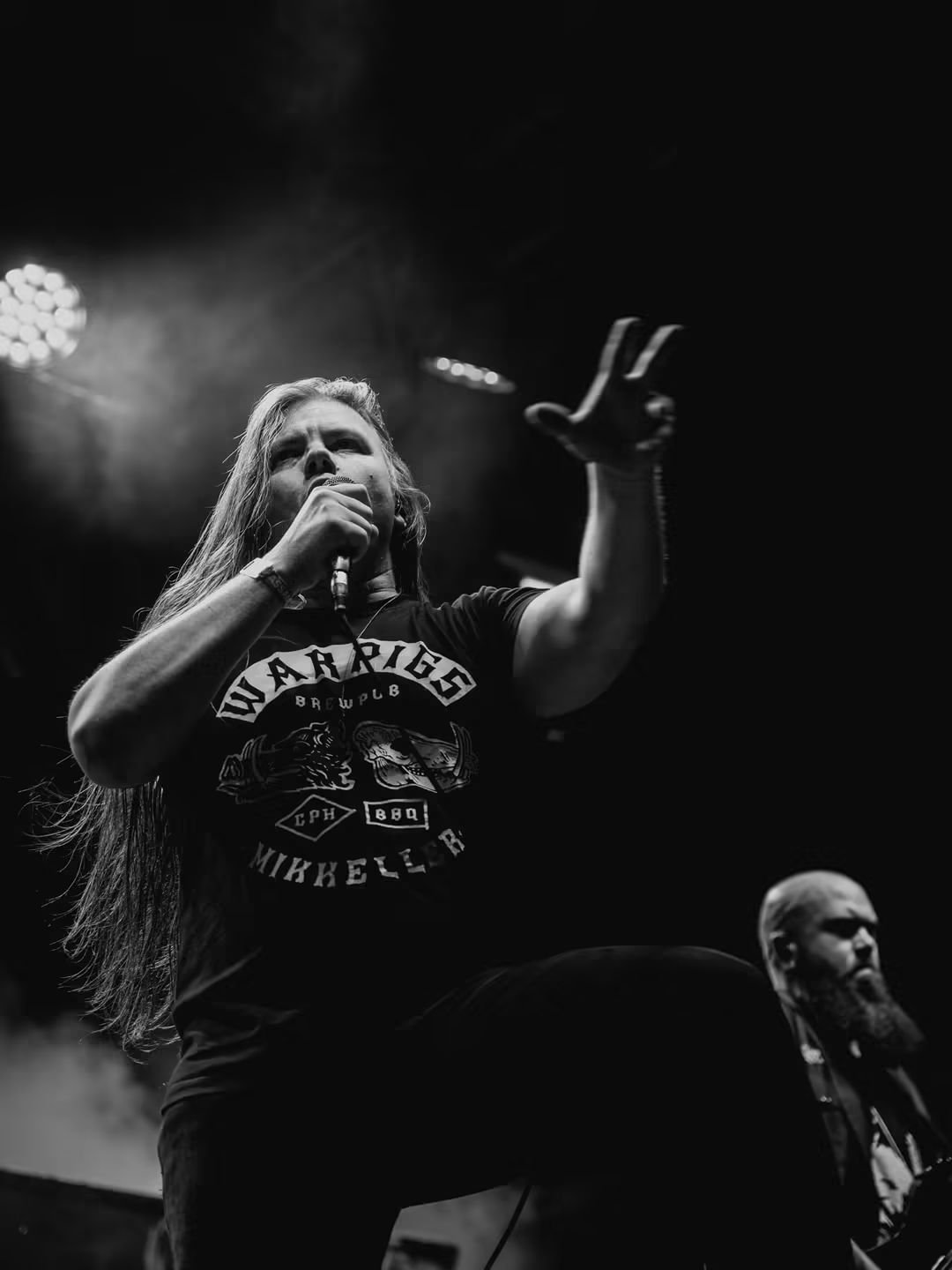
Hails to you, sir! It is an immense honour to be conducting this interview on behalf of VM-Underground. My many thanks go out to you! Keep me honest here, but at the time of preparing this interview, Cryptopsy is getting ready to tour Europe. You are performing at several major summer festivals. What makes a European festival special? What makes European festivals special is the sense of community. You have people travelling from all over the world, speaking different languages, but coming together because they share a passion for heavy music.
The crowds are incredibly dedicated and bring a unique energy that pushes every band to perform at their best. As a fan of metal myself, it’s also exciting to share stages with bands I’ve admired for years. Europe has always been important to Cryptopsy, so we’re looking forward to getting back out there and being part of that atmosphere again.
Going into this tour, what can fans expect from the show as well as from Cryptopsy? What is it as an artist that you are looking forward to most? For the Decibel tour, we really wanted to elevate the entire experience, not just show up and play the songs as tightly as possible. Obviously, that’s always the goal, but this time we spent a lot more energy thinking about everything surrounding the music too. The pacing of the set, the lighting, the transitions, the moments where the audience gets a chance to breathe before being hit with something devastating.
We’ve been doing this long enough to know that a great show isn’t just a collection of songs. It’s about taking people somewhere and making sure they leave feeling like they experienced something. If it’s someone’s first Cryptopsy show, I want them to understand immediately why this band has endured for so long. If they’ve seen us ten times already, I want them walking away feeling like this one mattered.
The tour in itself can be described as a Death Metal package. In your own words and views, how has the climate of Death Metal changed from when you started as a vocalist to what it is now? Death Metal has changed a lot since I first got involved. Back then, there was a stronger sense of regional identity. You could often tell where a band came from just by how they sounded.
Now everything is connected globally. A kid in South America can be influenced by a band from Finland, record music in their bedroom, and have people listening to it all over the world the next day. The level of musicianship is also absurd. There are players now who would’ve completely blown my mind twenty years ago.
What hasn’t changed is the reason people are drawn to Death Metal in the first place. It’s still about intensity, honesty, and pushing yourself creatively. The tools have changed, but the heart of it hasn’t.
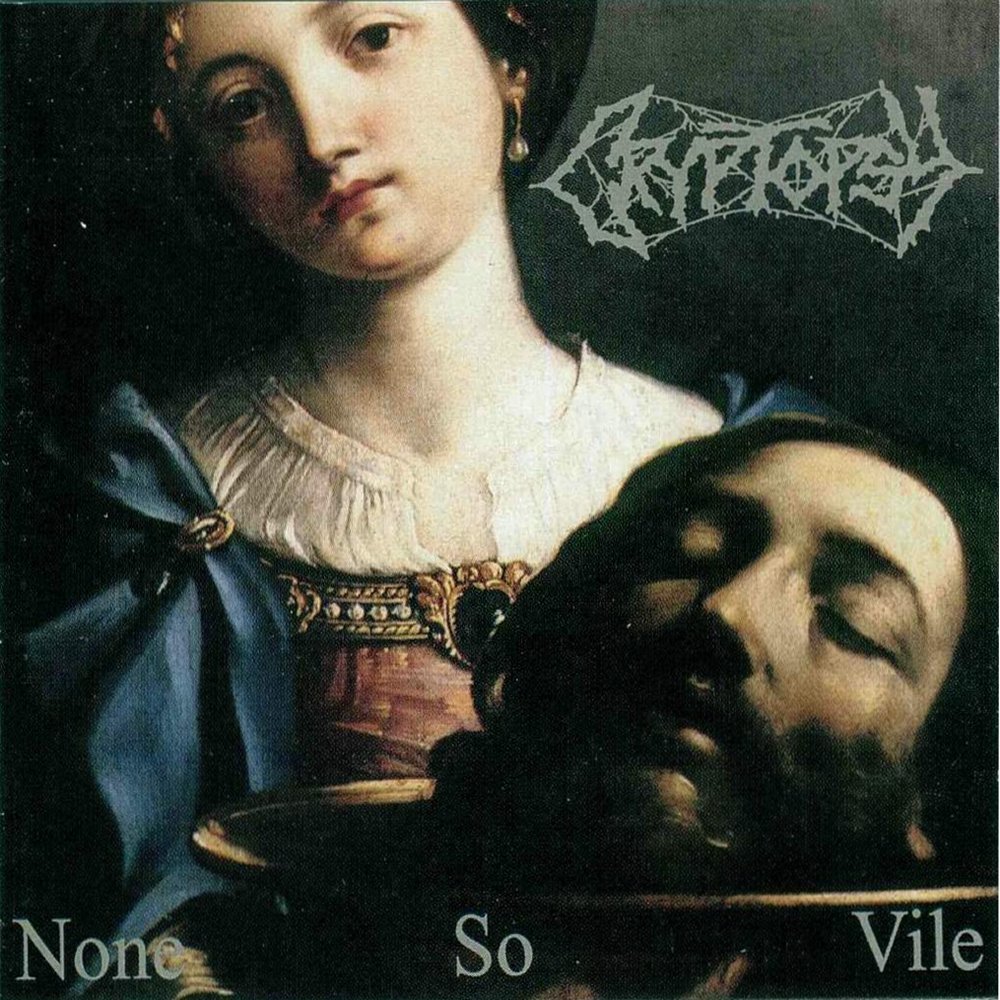
The blasphemous jewel that is ‘None So Vile’ will be 30 years old this year. In your words, as an artist who has adopted and performed these songs, how does this album resonate with you in an artistic and philosophical manner? ‘None So Vile’ is one of those records that follows you around the second you join Cryptopsy. You immediately understand how much it means to people.
When I first became the vocalist, I probably felt more pressure from that than I should have. Eventually, I realised that my job wasn’t to recreate 1996. Nobody can do that. My job is to understand what made that album special and bring that same spirit into what we’re doing today.
What I admire most about it is how fearless it feels. Nobody involved sounds like they’re asking permission. It’s ugly, violent, unpredictable, and completely committed to its own vision. That’s why people still talk about it thirty years later.
Following along with ‘None So Vile’, why do you think it has garnered so much adoration from the Metal community after so many years? Because it’s real.
You can hear it in every second of that record. There’s a danger to it that a lot of bands have tried to recreate, but it’s incredibly difficult to fake. It sounds like four musicians trying to push each other over the edge. It also doesn’t fit neatly into a box. Even now, when people talk about technical Death Metal, brutal Death Metal, or whatever label they want to use, ‘None So Vile’ still exists in its own strange space. The individuality is what gives it longevity. It wasn’t following a trend then, and it doesn’t sound trapped in one now.
From the start of your career with Cryptopsy to now, has the progression of performing these songs from ‘None So Vile’ changed in any aspect? Do you look at the lyrical structure or even vocal patterns differently? In other words, is there anything you appreciate now about these songs that you may have perhaps overlooked at the beginning? Absolutely. At first, you’re just trying to survive those songs.
They’re physically demanding, they’re mentally demanding, and they’re songs that people know extremely well. There’s definitely pressure that comes with that. As I’ve spent more time with the material, I’ve become more interested in the details. The phrasing, the dynamics, the moments where things pull back before exploding again. When you’re younger, it’s easy to focus only on the speed and aggression. Now I appreciate the space inside those songs more. Those quieter moments are what make the heavy moments feel even heavier.
Keep me honest here, but next year would mark your 20th year with Cryptopsy? Looking back on your origin within the band to the present day, what would you tell your younger self if you had the opportunity to? If you had to rewrite anything from the past differently, what would it be? It’s getting close to two decades now, which honestly feels ridiculous to say out loud.
I’d definitely tell my younger self to relax a little bit. When I joined Cryptopsy, I wasn’t some seasoned Death Metal vocalist who had everything figured out. I was learning on the fly and hoping I didn’t embarrass myself. A lot of what I know now came from making mistakes. Some shows were great, some weren’t, and that’s just part of becoming better at what you do. Looking back, I wouldn’t change much. Even the rough experiences ended up teaching me something valuable. Maybe I’d save myself a few panic attacks, but that’s about it.
You’ve mentioned in the past that your vocals have in a way undergone a metamorphosis, wherein you’ve changed the manner by which you approach your harsh vocals and in some way fused them with the era of Lord Worm. Can you expound on this? And how did this change occur? The evolution was definitely gradual.
When I first joined the band, survival was the primary objective. I wanted to get through the set, respect the material, and earn my place. Over time, I became more interested in understanding what made each era of Cryptopsy unique. Lord Worm obviously brought an incredible unpredictability to the band. You never knew exactly what was coming next, and that kept everything dangerous. I never wanted to imitate him, but I wanted to understand that mindset. As the years passed, I became more comfortable taking risks and allowing more texture, variation, and spontaneity into my own performances.
Keeping on the topic of your vocals, you have a certain feral vehemence to your voice. Can you give us an insight into how you discovered this within yourself? In addition to this, can you explain the power that goes into your vocal style and the mental state you must allow yourself to reach in order to channel that raw energy? A lot of that feral energy comes from preparation, oddly enough.
The better your technique is, the more freedom you have to let go mentally. If you’re worried about every note or every scream, you’re never fully present. For me, it’s not really about anger. It’s about focus. Everything narrows down to a single objective, and the outside world disappears for a little while. The audience sees chaos, but underneath it there’s actually a lot of control.
The energy that is commanded and expelled through your performance, can you divulge how you enter that state of mind right before the performance? What exactly does it entail to arrive at that mental state? Before a show, I try to eliminate distractions as much as possible.
I’m not somebody who has a long list of rituals or superstitions. Mostly, I want a clear head, a proper warm-up, and a few moments to focus on what’s about to happen. Once the first note hits, none of that matters anyway. The performance takes over and you’re completely in the moment.
Staying along the line of your live performance, during those moments when you are on stage, can you describe the actual atmosphere and spirit felt during those minutes? What exactly, in your own words, would constitute ‘the perfect performance’? It’s controlled chaos.
The best performances aren’t necessarily the most technically perfect ones. They’re the ones where everybody in the room is completely present. There’s a connection that happens between the band and the audience that’s difficult to explain. You can feel it immediately when it’s there. When that happens, the room changes. The energy becomes bigger than any individual person on stage, and those are the nights you remember years later.
Regarding Metal and, more specifically, Death Metal, how would you, as an artist, describe your connection to this art form? And if you were to describe its philosophy, how would you? Do you think that it extends beyond just the music? Death Metal has always been more than just music to me.
It’s a way of exploring extremes. Not just musically, but emotionally and creatively as well. The genre allows you to confront uncomfortable ideas directly rather than avoiding them. It gives artists permission to explore parts of the human experience that aren’t always pretty or easy to discuss. That’s why people stay connected to it for decades. It goes deeper than distortion and blast beats.
Staying on the topic of Death Metal, are there any bands which spark that creative outlet for you, whether it be in the performance or the actual atmosphere of the music? Adding to this, which bands have caught your attention in the past few years? There are always bands pushing the genre forward, which is one of the things I love about Death Metal.
I try to stay curious and listen to newer bands whenever I can because there’s so much creativity happening right now. At the same time, I still revisit the bands that shaped me as a musician and fan. That’s important too. The healthiest scene is one that respects its history while continuing to evolve, and I think Death Metal does a pretty good job of balancing those things.

Your newest offering, ‘An Insatiable Violence’, is barely a year old, yet it has garnered extremely positive reactions. Would you mind explaining the conception of the album? What was the inspiration and thought process behind it? I’ve read stories stating that the initial concept came from a dream you had. Would you mind going into this? The strange thing is that ‘An Insatiable Violence’ genuinely started with a dream, which sounds like the most stereotypically metal answer imaginable.
Normally, I forget my dreams almost immediately, but this one stayed with me. There was a specific atmosphere and imagery that lingered long after I woke up. Once I started writing, everything kept connecting back to that original feeling. It became the thread that tied the entire record together lyrically and conceptually. Sometimes ideas arrive slowly. This one showed up all at once.
The album itself felt like a natural extension of ‘As Gomorrah Burns’, even releasing within a two-year span. How exactly did the writing and recording take place? Was it a natural flow to go from ‘As Gomorrah Burns’ to this new album? It felt like a very natural continuation of ‘As Gomorrah Burns’.
We were already operating with a lot of creative momentum, so instead of stopping and resetting, we just kept moving forward. One thing I appreciated about this record was how little second-guessing there was. For once, we weren’t staring at songs wondering if they were finished. Most of the material revealed what it wanted to be fairly quickly. That’s a rare feeling, and I think you can hear that confidence in the final result.
On the album there’s a feature spot from Cryptopsy alumnus Mike DiSalvo on the track ‘Embrace the Nihility’. How did this collaboration come about? Adding to this, how was the energy of having his voice on the recording? Having Mike on the track felt completely natural.
There’s a shared history there that fans understand immediately, but beyond that, he’s simply someone who brings a unique energy whenever he’s involved. The collaboration never felt forced. It felt like the right person showing up at exactly the right moment. When you have an opportunity to connect different chapters of a band’s history in a meaningful way, that’s always exciting.
If I am not mistaken, the cover art was a piece from the late Martin Lacroix, another Cryptopsy alumnus. What was the decision that led to choosing this art to represent the songs? In addition to this, in your own words, how would you say that the art itself links to the actual atmosphere of the album? Choosing Martin’s artwork was about finding something that genuinely reflected the mood of the album.
The artwork has this unsettling quality that immediately grabbed us. It creates questions rather than answering them, which is something I love in visual art. The best album covers don’t explain the music. They invite you into its world. Martin’s piece felt like it belonged to the record the moment we saw it.
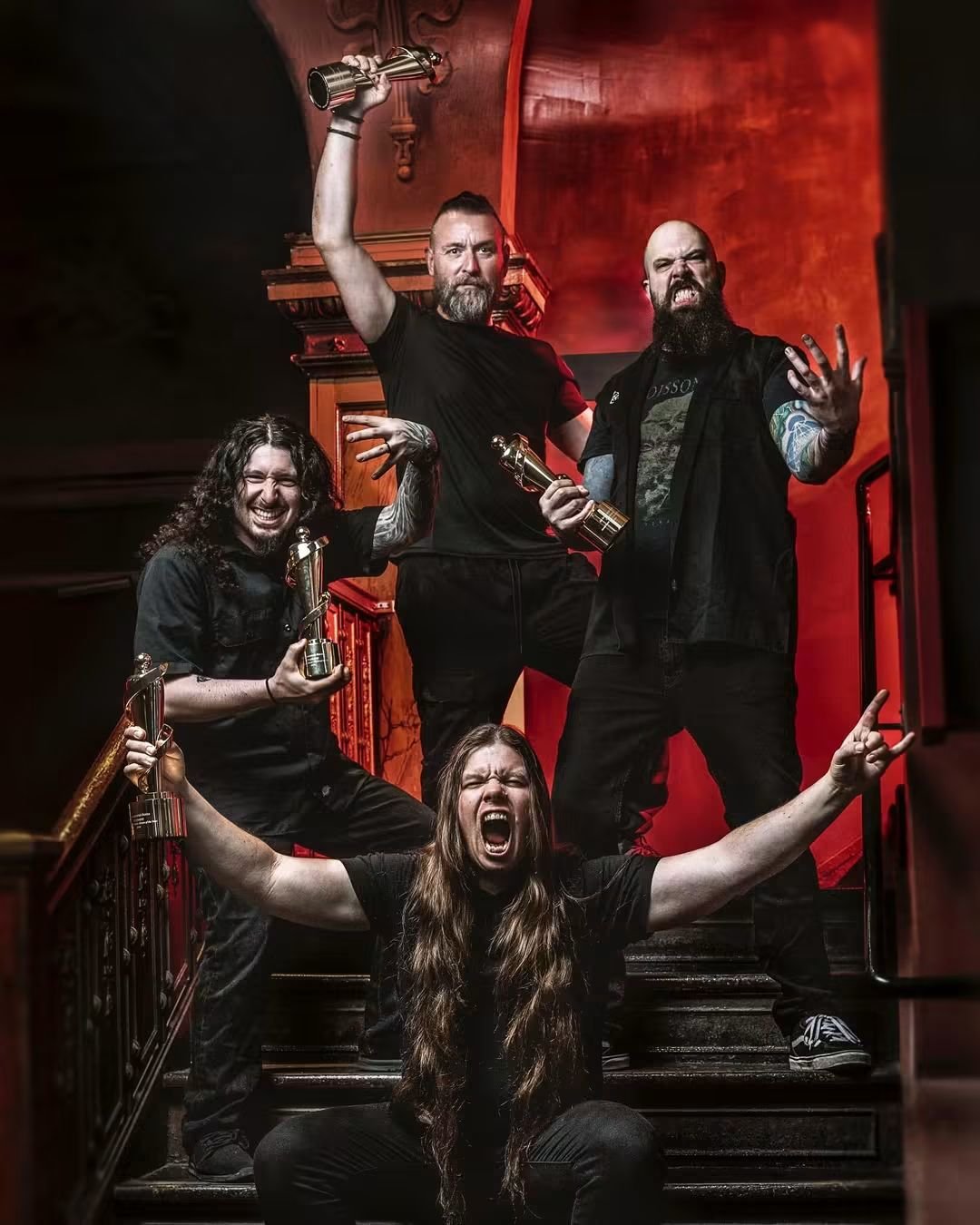
I must say, congratulations on your Juno 2024 win, and also your nomination for 2026. This is a massive achievement. What was the initial reaction within the band when you all won? As well as the reaction when you got nominated again? Did you foresee this new resurgence with these two albums, ‘As Gomorrah Burns’ and ‘An Insatiable Violence’? Winning a Juno is still one of those things that feels strange to say out loud.
If you had told me years ago that Cryptopsy would win a Juno, I probably would’ve laughed and asked if you had the right band. The nomination for ‘An Insatiable Violence’ is an incredible honour, but what means the most is seeing how people have responded to these recent releases. The momentum we’ve experienced over the last several years wasn’t something we planned. We just focused on making the strongest music we could. Seeing audiences connect with it has been incredibly rewarding.
You’ve become quite popular in my country of Trinidad, as your vocals were featured on a track, ‘Asphyxiation’, from our local band Lynchpin. I’m very curious to know how this collaboration came about and the energy that went into it. Also, I must ask, are there any plans to play in Trinidad one day? That collaboration came together very organically.
I’m always interested in working with passionate artists, regardless of where they’re from. Extreme music creates connections across borders in a really unique way. The energy on that track was fantastic, and it was a great reminder that heavy music communities exist everywhere. As for Trinidad, I’d absolutely love to play there. Any opportunity to bring Cryptopsy somewhere we’ve never been before is exciting.
In winding down with the interview, I’d like to take a dive into the past. You went independent for some years, around the self-titled album as well as the two EPs (in my opinion, very underrated). How was it during these years? And what made you all shift into that mode, especially with the ‘Book of Suffering’ EPs? What was the objective in trying to go that route, especially in releasing EPs instead of full-lengths? Going independent gave us a tremendous amount of freedom.
The ‘Book of Suffering’ EPs allowed us to stay creative and release music more consistently without waiting years between projects. The format also encouraged experimentation. We could try different ideas, take risks, and keep momentum going without the expectations that often come with a full-length record. Looking back, those EPs played an important role in shaping where the band is today.
My many apologies, as I know in interviews you’ve been asked many times about the ‘Unspoken King’ album, so I will try my best not to make it generic. Instead, I’ll ask: with everything you’ve learnt, the techniques and the growth you’ve undergone, if you were to revisit these songs and the album as a whole, what would you do differently? Would there be any changes? Would you ever revisit that era and rework the songs to match the current spirit of Cryptopsy? That record is part of Cryptopsy’s history, whether people love it or hate it.
I’ve never believed in pretending certain chapters didn’t happen. Every album reflects where the band was at that moment in time. If we ever revisited it, I wouldn’t be interested in ‘fixing’ it. I’d be interested in reinterpreting it through the lens of who we are now. That could be fascinating, but it would have to come from a genuine creative place rather than nostalgia alone.
In ending this interview, once again, I’d like to say thanks, as this interview meant a lot to me as a fan. I wish you the best on your tour, and I am most looking forward to seeing you all for the first time on May 1st. I shall leave the last words to you. Is there anything you’d like to say to the readers, any words you wish to depart with?
First of all, thank you for the support. The fact that people still care about this band after all these years means a lot to all of us.
