I rarely, if ever pre-order the albums I buy on vinyl. Even when it comes to upcoming albums from artists that I am familiar with and who have a strong track record of delivering good releases. I still exercise caution before expending my precious vinyl tokens on any record that I have not yet been able to hear in full. Immolation is a group that sits in a very unique category. I say this, because amongst all the legendary, world-renowned, classic Death Metal bands that are currently active, Immolation has possibly the most unwavering penchant for releasing consistently excellent quality albums of any higher profile Death Metal group ever. Preceded by two wonderful lead singles, album number twelve here, ‘Descent’ sees the band continue, yet again, to remind us why they are a truly special entity in the world of extreme music. The excitement and confidence that I place in this artist when it comes to releasing new music of such a quality means that my physical copy pre-ordering of Descent was irresistible.
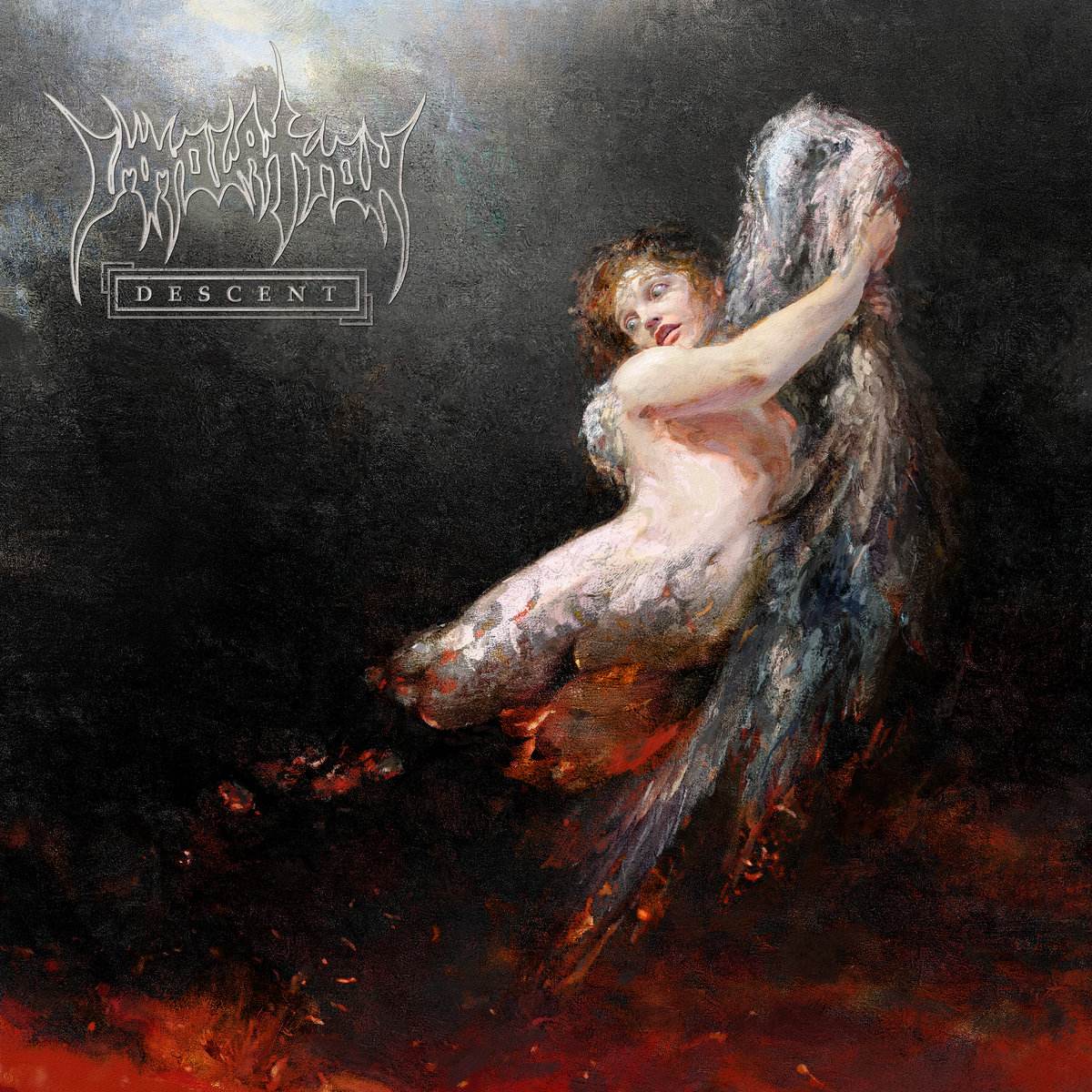
Sporting an unsettling cover painting courtesy of the twisted baroque art stylings of the incredible Eliran Kantor. The tone of the record is already accurately evident from the outset, Descent is one of the darkest sounding Immolation albums to date. Ross Dolan’s iconic vocals feature a very interesting placement within the mix, his ashen bellows engulfing the core frequencies of the songs in a neurotic, cerebral fashion without obscuring the instrumentation. All the while, this legendary bassist/vocalist sounds like some kind of evil pyromaniac devil, lurking within towering thick plumes of jet-black smoke. The general sound of his vocals on this record is spectacular, and they’re one of my favourite features of the album. The experience opens to ‘These Vengeful Winds’, a track that opens to a clean guitar theme, which is then echoed as the central instrumental meditation once the full band tears into the picture. The track sounds quite demonic, and it features interesting and catchy riff work from Robert Vigna and Alex Bouks. Of particular note during this opening rager is the drum work of longtime stickman Steve Shalaty, I love the depth that is brought to the track from his agile and complex mechanical style.
‘The Ephemeral Curse’ serves up more of this explosive high-quality, thanks in large part to Vigna’s lead guitar contributions. His familiar, unorthodox approach to solo construction and unique dissonant fury can really steal the show from time to time. Like on many Immolation records, his nasty solos arrive in a flash and then vanish repeatedly through their various sequences, similar to hot sparks igniting then immediately dying. ‘Adversary’, serving as the album’s lead single, centres around a tightly performed rhythmic discipline, and pinch-harmonic filled guitar parts offer a counterpoint to the song’s muscular structural core. The track ‘Bend Towards The Dark’ sees the band trudging forward during another exercise in perforating rhythmic syncopation. That is, until a transition around the song’s mid-section towards an almost ascendant sounding melodic refrain, the band finally crashes down with brutal intensity during the song’s closing moments. The penultimate track on the album is the instrumental ‘Banished’, which is largely centred around some quieter guitar noodling. From a compositional approach, this instrumental isn’t anything particularly distinct or interesting, but I appreciate the moment of relative calmness it offers before the album’s closer. Shalaty’s drums on the final six minute title track hit you like a seismic shockwave, and the song features many of the most punishing and exciting riff ideas on the record, and overall the track is a powerful send off.
When analysing the individual songs on Descent, it may sometimes feel like the track list doesn’t feature quite as many distinctive classics as some of the band’s best older albums do. I find that the album is a very dark experience that explores a specific tone and mood, and the record works best when examined as a whole piece. Immolation are as relevant today as they were in the nineties, largely due to a uniquely evil sound, and their carefully considered evolution through production stylings over the years. They’re a band that have always reached for excellence and maturity in composition, resulting in them never having fallen prey to the legacy band category, unlike a great many of their formative-day contemporaries have. Descent is another great album from this classic, talented group, and I reckon that it will go on to age quite well amongst the band’s enviable discography.