If you go back far enough into the Singapore underground, Abhorer did not simply appear under that name one day. The musicians had already gone through Perfidious, then Technophobia, and then Tombcrusher before Abhorer was established. Tombcrusher was also the name used by the drummer, which makes some of the early history confusing when different people recall the band years later. What matters is that this was a group of Singaporean musicians growing up inside the same small Extreme Metal environment and gradually becoming more extreme with every change in name and lineup.
The early Abhorer lineup of Exorcist, Crucifer, Imprecator, and Tombcrusher produced ‘Rumpus Of The Undead’ in 1989, and that demo is where things really started to move outside Singapore. At that point, there was no internet to throw a track online and wait for people around the world to discover it. You had to physically send the tape, write letters, exchange addresses, and wait. Abhorer did exactly that, and their material ended up circulating among people who were already trading the most extreme records and demos coming out of Europe, Japan, and South America.
What makes the history more interesting is that the Singaporean underground was not some perfectly united brotherhood. There were friendships, rivalries, different groups, and plenty of strong opinions about who was genuine and who was simply hanging around the scene. Abhorer and Impiety were particularly close, with the musicians knowing each other well and sharing rehearsals, drinking sessions, and contacts. At the same time, members were moving between different bands and projects, and there was competition for musicians. Tombcrusher eventually had to make a choice between continuing with Abhorer or concentrating on Impiety, so Abhorer brought in Dagoth. Dagoth was already involved with other Singaporean bands, including Profancer and Xasthur, so this was not simply a case of finding somebody who could sit behind a drum kit. These musicians were all connected to the same relatively small network.
That sort of thing was normal in Singapore. When you have a small scene, musicians know one another whether they want to or not. Someone leaves one band and ends up in another. Someone starts a side project with another group. Someone has access to a contact overseas, and suddenly everybody wants the address. One friendship can lead to a rehearsal, a split release, or a tape exchange, while another disagreement can keep two groups apart for years. It was not the clean little underground family that people sometimes imagine when they look back at old Singaporean Metal.
Abhorer were also very serious about keeping their music connected to the international underground rather than chasing recognition at home. Their relationship with Necrophile from Japan is a good example. The two bands eventually shared a split release, and this was not some random pairing put together by a label looking for two names to fill a record. There was a genuine underground connection there. Abhorer had already built relationships outside Singapore and were much more interested in working with people they considered part of that world.
After the Necrophile split, Abhorer deliberately disappeared for a while, and people outside Singapore started assuming the band was finished. They were not simply sitting around waiting for the next release, however. There was a period of stepping away from the scene and thinking about what they were actually doing. That became particularly relevant as a newer generation of Black Metal and Death Metal bands began appearing and the members felt that many of these newcomers had little understanding of the bands and people who had built the earlier underground.
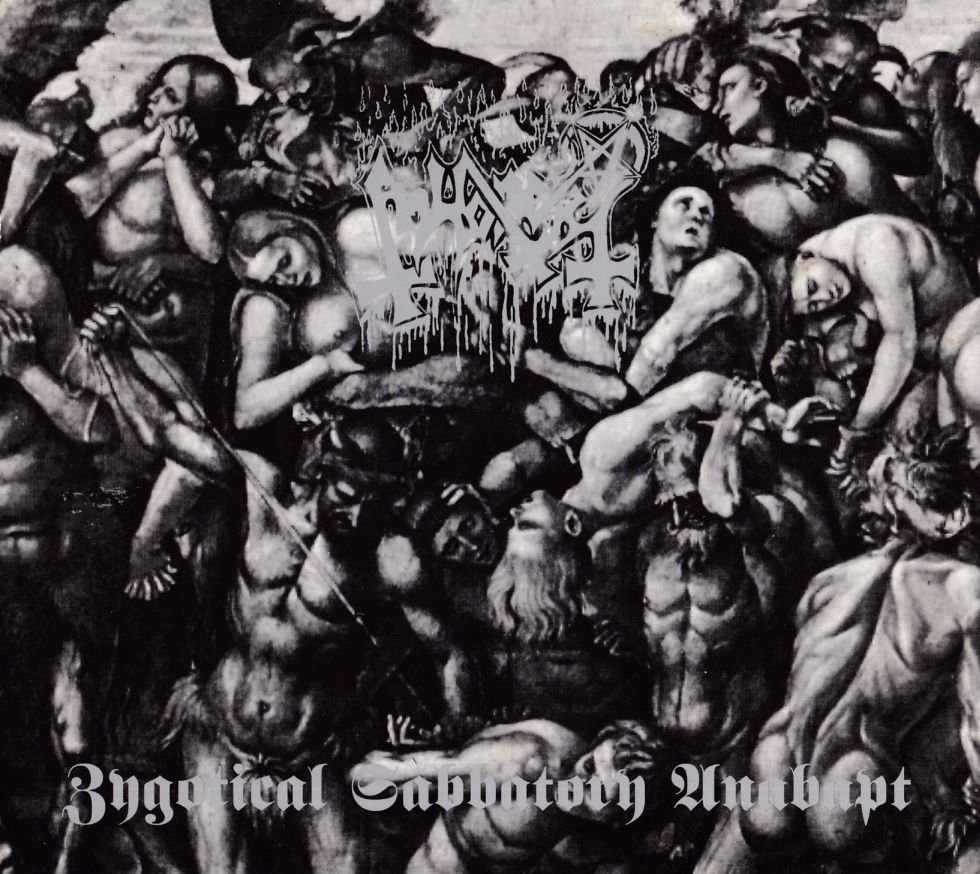
By the time ‘Upheaval Of Blasphemy’ appeared, the difference was obvious. The music was tighter and more developed than ‘Rumpus Of The Undead’, but it was still recognisably Abhorer. Then came ‘Zygotical Sabbatory Anabapt’ in 1996, with Dagoth now behind the drums alongside Crucifer, Exorcist, and Imprecator. This is where the years of development really came together.
The first thing I notice about the album is how much more sophisticated the riffing has become without losing the ugly character of the band. This is not primitive Black Metal anymore, and it is not straightforward Death Metal either. Exorcist’s guitar work moves rapidly between individually picked notes, tremolo passages, Thrash-influenced patterns, and heavier Death Metal riffs. There is more going on in these songs than on the early demo, but the band never falls into the trap of making the music complicated simply because they can.
Crucifer’s vocals are still filthy enough to keep the connection with the earlier Abhorer material. The delivery has a strong Death Metal character, but it does not have that polished mid-1990s sound that was becoming increasingly common. There is an almost spiteful quality to the vocals, particularly when they sit over the faster guitar passages. The lyrics and song titles are completely in keeping with the band’s obsession with blasphemy, Satanism, desecration, and sexual sacrilege, but musically the album is where Abhorer really shows how much they had developed.
Dagoth’s drumming gives the record another dimension. There is plenty of speed, but he does not simply blast through everything. The drums follow the changes in the guitar work and give the slower riffs enough weight to stand on their own. This matters because Abhorer understood something that plenty of faster bands did not: if every riff is played at the same speed, eventually the listener stops noticing the speed. The changes in pace on this album give the faster passages considerably more impact.
The production is another part of the record that deserves attention. By 1996, a lot of Extreme Metal was becoming increasingly polished, particularly in Death Metal. Abhorer did not go down that road. The instruments are clear enough to hear the details in the playing, but the album still has a rough edge. The guitars are sharp rather than overly thick, the drums have enough presence to follow Dagoth’s playing, and the vocals remain firmly embedded in the music.
There is also a strange amount of musical discipline underneath the filth. Listen to the way the band handles the transitions between the faster sections and the heavier riffs: they are not simply throwing ideas together. The songs have been arranged carefully, and the individual riffs are given enough space to make an impression before another section arrives. That is a major difference between this album and the earliest Abhorer recordings. The aggression is still there, but the musicians now know exactly how to control it.
The title track is a good example of where the band had arrived. The riffs have a more technical character than anything from ‘Rumpus Of The Undead’, but they still sound nasty rather than clinical. Elsewhere, the band moves between fast Black Metal passages, Death Metal riffing, and more restrained sections without losing its identity. There are melodic touches too, although they are never presented in the polished or sentimental way that would become common in other branches of Black Metal. Abhorer’s melodies still sound diseased.
What happened around the band after this period is almost as interesting as the record itself. Abhorer had become increasingly disillusioned with parts of the scene. Dagoth later spoke very openly about the way he and the other members viewed bootleggers, posers, and what they considered the weakening of the old underground spirit. They had been involved since the early days and did not particularly appreciate people appearing later and behaving as though the history before them did not matter. Eventually, the members went their separate ways, and Abhorer officially ceased operating as a band.
Then, years later, came another piece of underground nonsense that would have been almost funny if money had not been involved. The 2004 ‘Unholy Blasphemer’ compilation was released by Xtreem Music, but Abhorer later rejected it as an unauthorised release. The band’s side of the story was that somebody had represented himself as being authorised to deal with the material and had taken money from the label. Xtreem Music disputed that version and maintained that it had a signed agreement and had dealt with someone it believed had the authority to represent the band. Whatever side of that dispute you believe, it is exactly the kind of mess that existed in the old underground once money, old tapes, labels, and band names became involved. The important thing is that Abhorer did not quietly accept the release and move on: they objected to it.
That whole episode also makes the earlier attitude of the band easier to understand. These were not musicians who were desperate to see the Abhorer name attached to anything available. They were protective of what they had created, and they had already developed a fairly strong distrust of parts of the Metal scene. There were people they respected enormously and people they wanted nothing to do with. The friendship with Necrophile and the close relationship with musicians from Impiety show that clearly. Abhorer did not hate everybody; they simply had very strong opinions about who belonged in their circle.
For us in Singapore, that part of the story is important because it stops the whole thing from becoming another romantic tale about the good old days. The old scene had genuine friendships, people helping each other, and musicians going out of their way to send tapes and contacts overseas. It also had arguments, egos, competition, and people falling out. Bands could be close one year and completely separate the next. Someone could be respected by one group and disliked by another. That was the reality of a small underground where everybody knew who was doing what.
‘Zygotical Sabbatory Anabapt’ therefore sounds like the product of several years of that environment rather than a record that appeared in isolation. Perfidious, Technophobia, and Tombcrusher had led to Abhorer; ‘Rumpus Of The Undead’ had established the name; the Necrophile connection had taken them further into the international underground; Tombcrusher eventually departed and Dagoth entered the lineup; and the music kept becoming more developed without losing its original hostility.
When you finally put the album on, all of that background falls into place without needing to romanticise it. This is a Singaporean band that had spent years dealing with the limitations of a small local scene while simultaneously building a reputation outside the country. They had their own friendships, their own enemies, their own standards, and, eventually, their own reasons for walking away. ‘Zygotical Sabbatory Anabapt’ is the strongest musical document of that period because the band had reached the point where the raw violence of the early years and the greater musical control they had developed were finally sitting together on the same record.
That is why I still hear this album as distinctly Abhorer rather than simply another old Black/Death Metal record. The music carries the filth, but underneath it there is a lot of experience. By 1996, these guys knew exactly what they wanted Abhorer to sound like, and they had already spent years dealing with everything that came with being Abhorer.