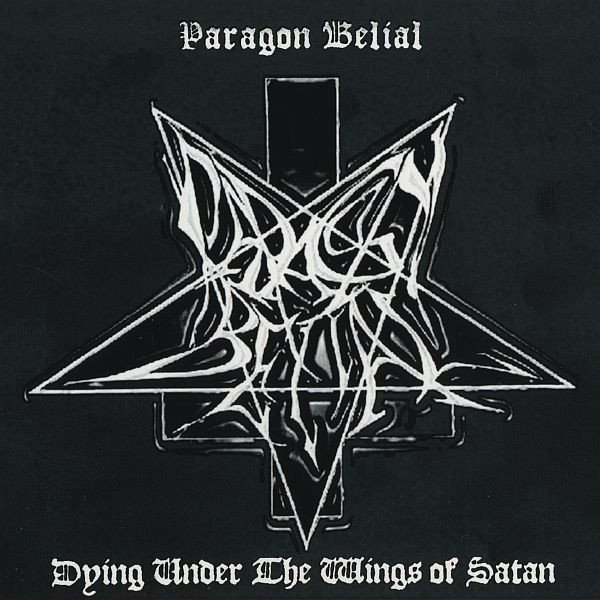
Germany had a Black Metal underground that was full of bands with their own character, and Paragon Belial from Mönchengladbach are among those names that deserve more attention. ‘Dying Under the Wings of Satan’ brings together their debut ‘Hordes of the Darklands’ and the much later ‘Nosferathu Sathanis’ in a limited double CD edition, giving us two albums separated by twelve years. This is a killer package for anyone like myself who loves those old double jumbo CD cases with 4 CDs or, in this case, a fat, thick Digipak! Aaahhh, the joys of digging into the less familiar corners of the old European underground! Because Paragon Belial have that particular kind of German Black Metal spirit that does not depend on copying the better-known Scandinavian bands to make its mark.
Formed in 1993, Paragon Belial featured Andras on vocals and bass, Ralph on guitars and Zahgurim on drums. Andras’s connection to Bethlehem gives the band another link to the German Extreme Metal underground, although the music here is a different beast altogether. Their approach is direct, dark and aggressive, drawing on the old Black Metal tradition with enough Thrash Metal and primitive extremity to keep the riffs moving. Their name might have come from a Darkthrone song, but there is more to this band than a reference to Norwegian Black Metal. The appeal lies in how they take familiar ingredients and give them their own rough identity.
‘Hordes of the Darklands’ was originally released in 1995, with the recording dating from December 1995 according to the release information, and it captures the character of that mid-nineties period. The guitars move between fast, aggressive riffing and darker passages, while the drums shift through different tempos without making the songs feel overworked. Andras’s rasping vocals suit the material, bringing the right amount of venom to songs such as ‘Coming of a New Dynasty’, ‘Black Tears of Diabolical Rage’, ‘Shadow Grave’ and ‘Horns of Reprisal’. The instrumental ‘Cradle of Blood’ adds another shade to the album before ‘Necromancer of the Dark Valley’ and ‘Verdelet (Master of All Zeremonies)’ bring the record towards its conclusion. There is a genuine charm to this kind of Black Metal, where the riffs and atmosphere do the work without every song needing to become an elaborate composition.
Paragon Belial also remind me of how much worthwhile music came from the German scene during those years. Bethlehem were exploring their own dark and unsettling territory, Desaster carried the old Black and Thrash Metal spirit, while bands such as Moonblood, Ungod, Nagelfar and Lunar Aurora each had their own identity and approach. These bands were not all trying to sound alike, and that made discovering them part of the fun. Some remained obscure, others found a wider audience, but the underground was full of records that could surprise you if you were willing to look beyond the usual names. Paragon Belial belong in that conversation, not because they followed a trend, but because they had their own way of delivering dark and aggressive Metal.
‘Nosferathu Sathanis’ arrived in 2008 after a long gap, and the change in production is immediately noticeable. The sound is clearer and heavier, with the guitars and drums carrying more definition, but the band has not abandoned its straightforward attack. The title track gets things underway before ‘666 Calling of the Dead’ brings more speed and aggression. ‘Goatspawn’ is one of the album’s heavier moments, using a slower, crushing pace that gives the riffs room to sink in. The Hellhammer cover ‘Horus / Aggressor’ is another fitting inclusion, connecting Paragon Belial to the primitive foundations that helped shape so much Extreme Metal. ‘Abomoth’ offers another shift in pace, while ‘Solemnize Me’ and ‘Grimdozer’ bring further weight and variation. ‘Necromancer’ continues the dark atmosphere, and ‘Black Metal United & Strong’ closes the album with a direct statement of allegiance to the music.
The twelve-year gap between the two albums makes this double CD particularly interesting. ‘Hordes of the Darklands’ carries the rough character of the nineties, while ‘Nosferathu Sathanis’ has a fuller and more defined sound without abandoning the band’s roots. The later album does not simply repeat the debut, and hearing them together gives a better picture of Paragon Belial than either record would on its own. Both have their own appeal, and the collection makes sense as a retrospective of a band that spent years away before returning with another full-length.
I do miss the days when Black Metal had so many distinct identities, when an obscure band could surprise you with a sound that was genuinely its own. These days, too much of the genre seems caught up in fashionable aesthetics, with Post-Black Metal and Shoegaze becoming part of a scene that sometimes feels more concerned with image than the music itself. Paragon Belial take me back to a time when the riffs mattered and bands could sound different from one another. That is what I value about releases like this, and why I still enjoy returning to the less celebrated names from the old German underground.
‘Dying Under the Wings of Satan’ is a fine double CD for anyone interested in discovering or revisiting Paragon Belial. It gives both albums the space they deserve and captures two different periods in the band’s history, from the dark, rough-edged attack of ‘Hordes of the Darklands’ to the heavier production and forceful songwriting of ‘Nosferathu Sathanis’. Paragon Belial may not have become one of the biggest names in German Black Metal, but these records show why obscure bands like them remain worth remembering.
